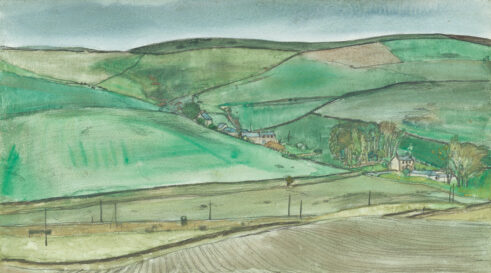
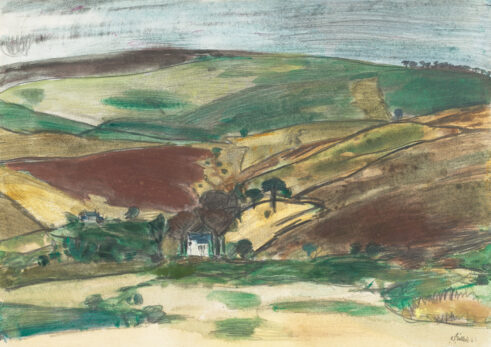
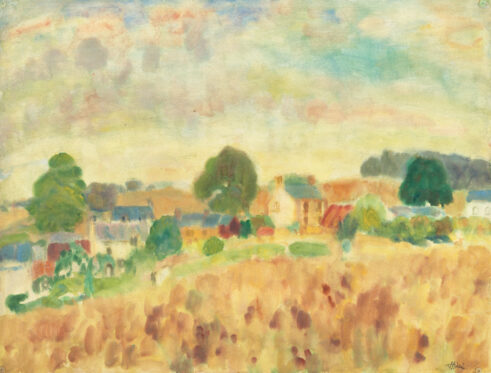
We made the shift to Temple just after the outbreak of war in 1939 and that was another important landmark for me as an artist. I needed to live in the landscape I was painting and Temple, situated within a mile or two of the fine, bare Moorfoot Hills and with the rich agricultural countryside of Midlothian within easy reach in the other direction – it was just what I wanted. I had the whole Border countryside full of subject matter open to me.
William Gillies
About Sir William Gillies

Sir William Gillies was the dominant figure of the Edinburgh School over which both his personality and his work had a quiet authority. He led by example at the College of Art, encouraging his students to experiment but from a firm grounding in looking, and of course practice, drawing in particular. He also selected his staff to reflect this ethos: men and women who had a similar independence but respected hard work, what William MacTaggart called the good habit. The duties of teaching for Gillies and many of his colleagues in the School of Drawing and Painting were combined with their own practice without conflict; being a professional painter: working and exhibiting, was understood as integral to the reputation and health of the School. Robin Philipson, Elizabeth Blackadder, John Houston, David Michie and James Cumming were the beneficiaries of this attitude, along with their students, quietly instilled by Gillies over his fifty years of influence.