Close
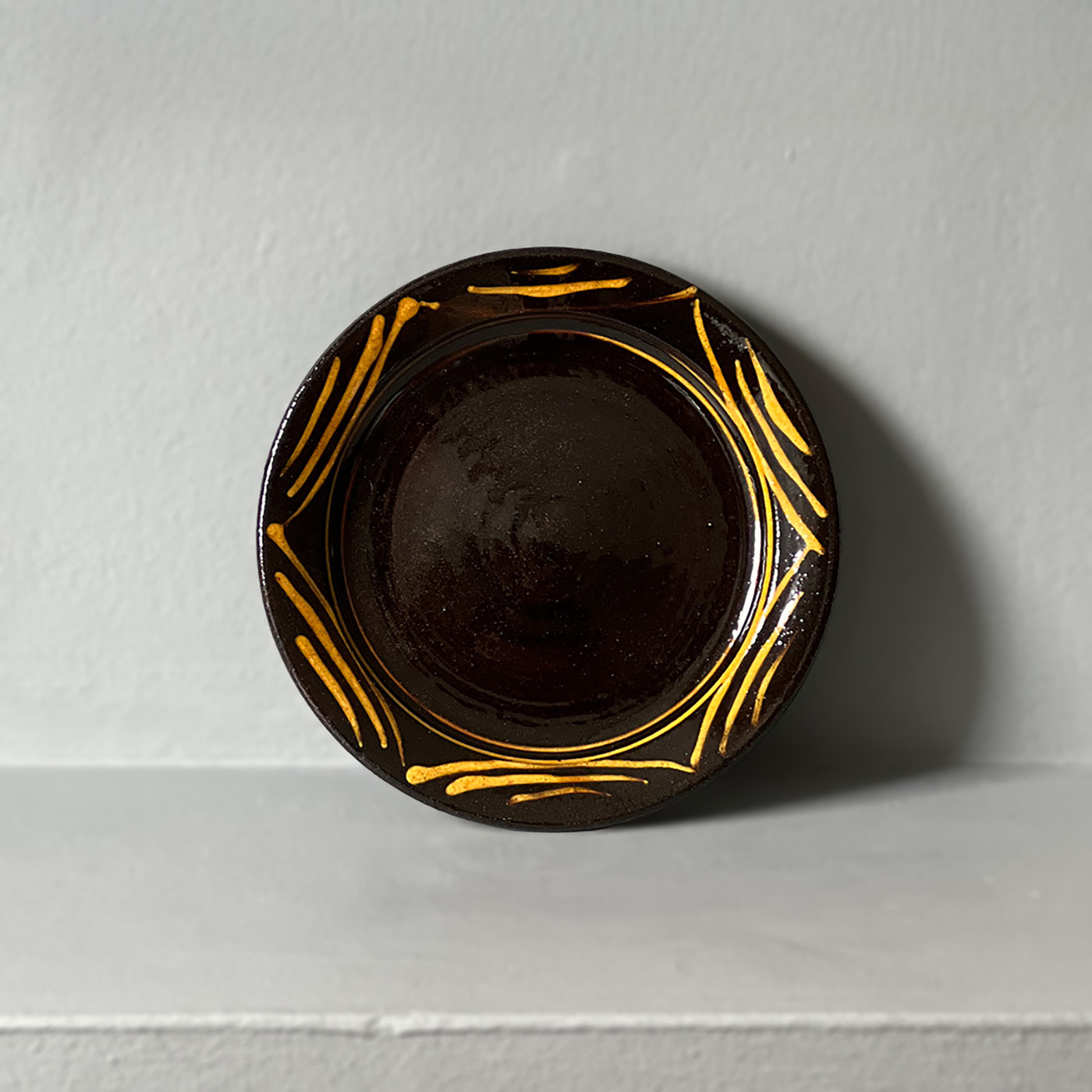
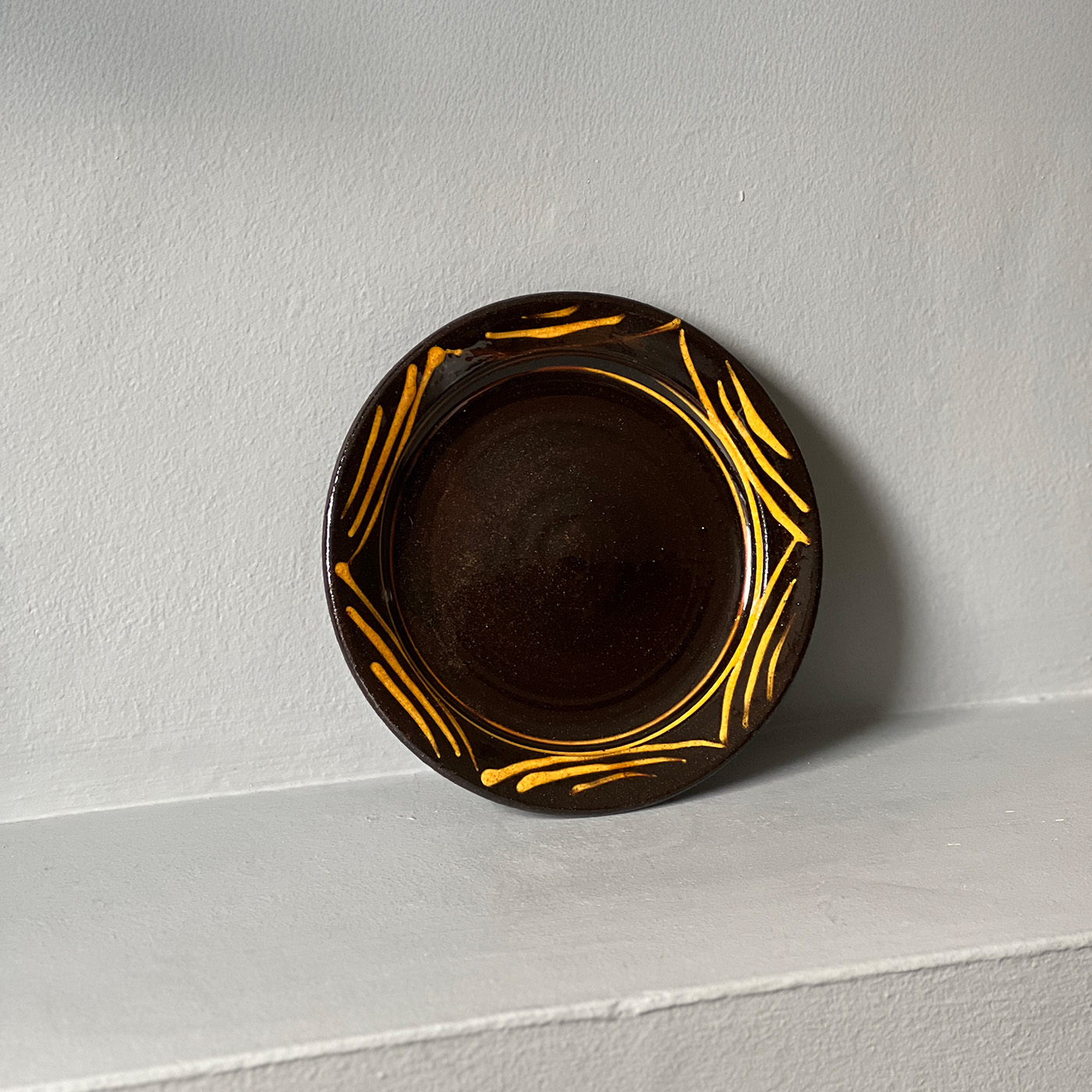
7 available, priced individually
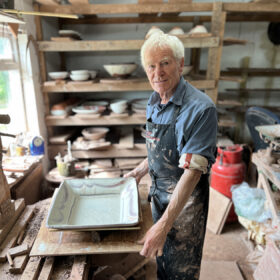
The form and function of my work can be traced back to centuries-old pots such as English medieval jugs and early Tamba ware from Japan.
Born: 1943
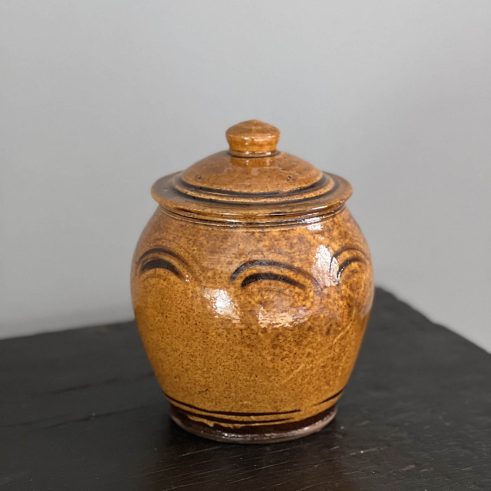
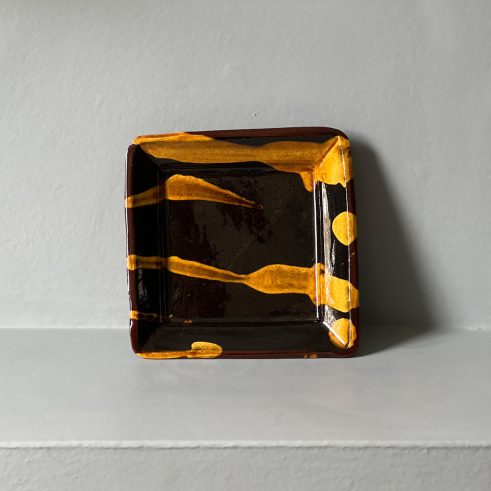
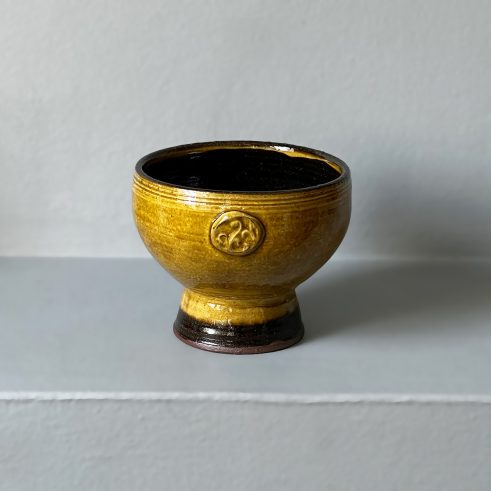
Clive Bowen is one of the most important figures in British studio pottery, celebrated for his revival and reinvention of the English slipware tradition. For more than five decades he has worked from Shebbear Pottery in North Devon, where he continues to make pots rooted in function, rhythm and the pleasures of daily use. His work draws deeply from centuries-old English medieval pottery and the traditions of North Devon earthenware, while also engaging in dialogue with Japanese folk ceramics and the wider studio pottery movement.
Bowen first studied painting and etching at Cardiff Art School from 1959–63 before undertaking a formative apprenticeship with Michael Leach at Yelland Pottery in North Devon between 1965–69. The discipline of repetition, throwing and workshop practice established there remained central to his philosophy of making. A subsequent period working as a production thrower at the historic C.H. Brannam Royal Barum Ware pottery in Barnstaple sharpened his understanding of functional pottery made with clarity, endurance and purpose.
In 1971 Bowen purchased a small agricultural property at Shebbear near Holsworthy in North Devon and established his pottery in the former farm outbuildings, where he continues to live and work today. What emerged over the following fifty-five years was not simply a workshop, but a complete way of life centred around making, hospitality, shared labour and the belief that handmade pots belong at the centre of everyday experience.
Bowen’s pots are made using local Fremington clay blended with red Stoke clay and silver sand from the Cornish china clay industry, producing surfaces of remarkable warmth, texture and vitality. He digs ochre clay directly from the stream running through his woodland to create his distinctive decorating slips. His palette remains deliberately restrained, typically working with black, creamy white, green and ochre slips which allow attention to fall on proportion, gesture and the movement of the hand.
Almost all of Bowen’s work is wheel-thrown, from generous jugs and bowls to dishes, chargers and large storage jars. His surfaces are animated through slip trailing, combing and sgraffito decoration applied with remarkable freedom and spontaneity. David Whiting described Bowen as “a gestural decorator, even something of an action painter,” recognising the fluid energy and immediacy that characterise his work.
The jug remains central to Bowen’s practice. Questions of balance, pouring, weight and handling are approached with extraordinary precision, reflecting his belief that beauty and utility are inseparable. For Bowen, the success of a pot lies not simply in appearance but in how it functions within daily life: how it pours, how it sits in the hand, how it contributes to the rituals of the table.
Though deeply rooted in Devon and the English slipware tradition, Bowen’s outlook has never been insular. He has exhibited extensively in Japan, where his work has found a devoted audience and where his dialogue with Japanese folk pottery traditions has continued to evolve over many years. Exhibitions with Masaaki Shibata and presentations at Gallery St Ives in Tokyo and Hankyu Department Store in Osaka have reinforced his international reputation.
The Scottish Gallery has played an important role in celebrating Bowen’s work through a series of exhibitions including Clive Bowen at 70 in 2013, The Devon Potter in 2017, Masters of Slipware: East and West with Masaaki Shibata in 2020, and 55 Years at Shebbear Pottery in 2026.
Public collections include:
Victoria & Albert Museum, London; National Museum of Wales, Cardiff; Ulster Museum, Belfast; Crafts Council Collection, London; York City Art Gallery; Stoke on Trent City Museum; Winnipeg Art Gallery, Canada; Mingeikan, Tokyo; Mashiko Museum of Ceramics, Japan; Fitzwilliam Museum, Cambridge.

Struggling to find that perfect gift? We have the solution! A Scottish Gallery Gift Voucher is the perfect gift for friends, family, customers and colleagues.

Own Art is a national initiative that makes buying contemporary art and craft affordable by providing interest-free credit for the purchase of original work.