Close
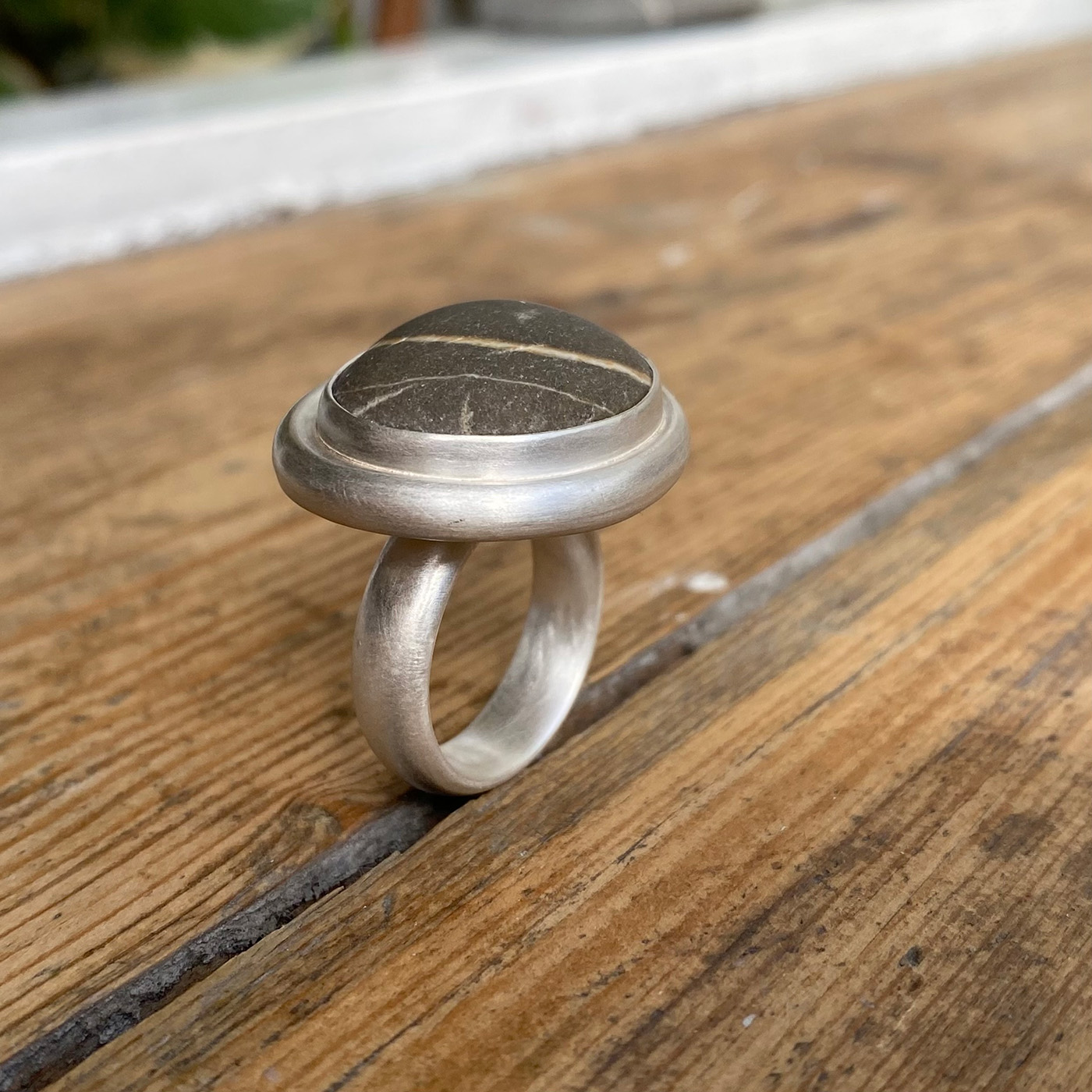
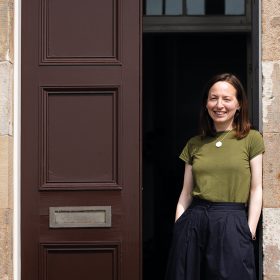
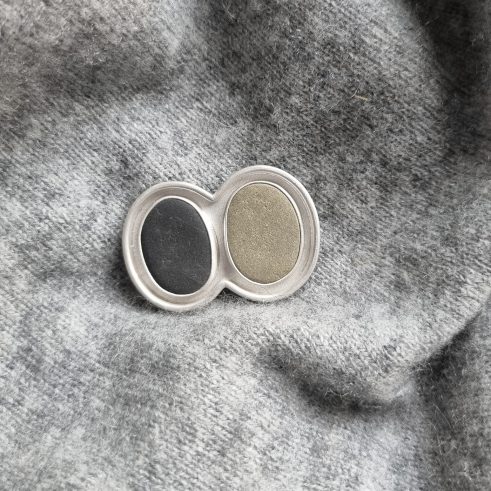
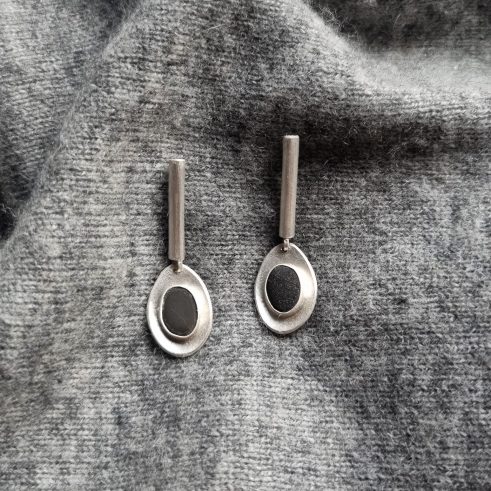
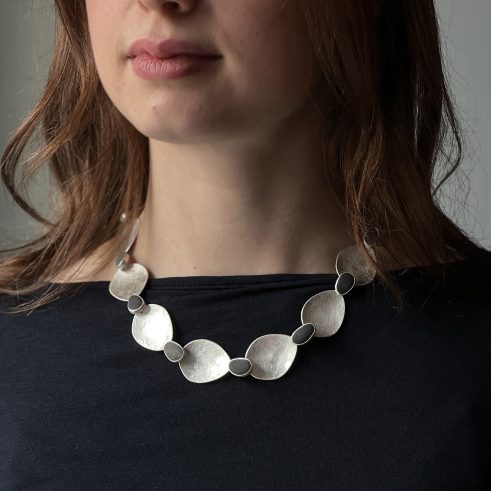
The unique landscape of the Orkney Islands provides inspiration for Grace Girvan’s jewellery. She enjoys beach combing and uses the objects that she unearths on her expeditions in her work, combining found objects such as pebbles, driftwood and shell with precious metal and enamel. Her work is evocative of her inspiration, through a restrained colour palette of soft greys, blues, greens and browns she conveys the washed out, sun bleached colours of the sea and shore.
Public Collections include:
Aberdeen Art Gallery and Museums, Aberdeen
I grew up on South Ronaldsay, the southernmost island in Orkney that is connected to the mainland by the Churchill Barriers. My childhood was spent on a farm, surrounded by open space and the outdoors. My grandparents lived very close by, and if there weren’t cattle in the fields, we would head straight across to visit them. Otherwise, we would take the road, which passed by the beach. That beach became an important place for us; we would often go there to search for Groatie Buckies (arctic cowries), smooth pebbles, and to watch the curious seals basking on the rocks. When I return to Orkney now, what strikes me most is the vastness of the sky. The land is relatively flat and there are very few trees, so the sky feels endless. The special quality of the light, combined with that great sense of space, is something I treasure deeply. The beach I most often return to is Chapel Point, the same one we used to visit on the way to my grandparents’ house. The pebbles there are perfectly formed, flat, smooth, and need no cutting, polishing, or shaping. I use them exactly as I find them, in their natural state.
In my work, I aim to translate the colours, light, and calmness of Orkney into jewellery. I use transparent enamels in soft blues, greens, and greys on silver. The silver beneath creates a luminous glow through the enamel, echoing Orkney’s unique light. By matting the surface of the enamel, the colours take on a watercolour-like softness, reminiscent of the landscapes I love. The pebbles themselves are always left unaltered, flat, smooth, and with naturally regular edges. I feel it is more honest to use them exactly as they are. Recently, I have been embracing their variety, celebrating the different hues and textures that reflect Orkney’s rich geology.When I am in Orkney now, I am more intentional. I try to slow down, to absorb the landscape, the light, and the colours that inspire me. I take photographs, I collect pebbles, and I let those experiences feed into my designs. Collecting pebbles has also become a family ritual. My parents often join me, and they have an excellent eye for the shapes I am looking for. When I work with certain pebbles, I remember who picked them up, or I recall the exact beach where I found them. That connection to my family, to place, and to memory feels as important as the physical material itself. I am still excited every time I find a new pebble; their beauty never ceases to amaze me. Some of my favourite places to collect include the beach at Chapel Point, Newark or Dingieshowe in Deerness, and the beach at the fourth Churchill Barrier on South Ronaldsay. Each of these places holds its own sense of discovery and connection to home.

Struggling to find that perfect gift? We have the solution! A Scottish Gallery Gift Voucher is the perfect gift for friends, family, customers and colleagues.

Own Art is a national initiative that makes buying contemporary art and craft affordable by providing interest-free credit for the purchase of original work.