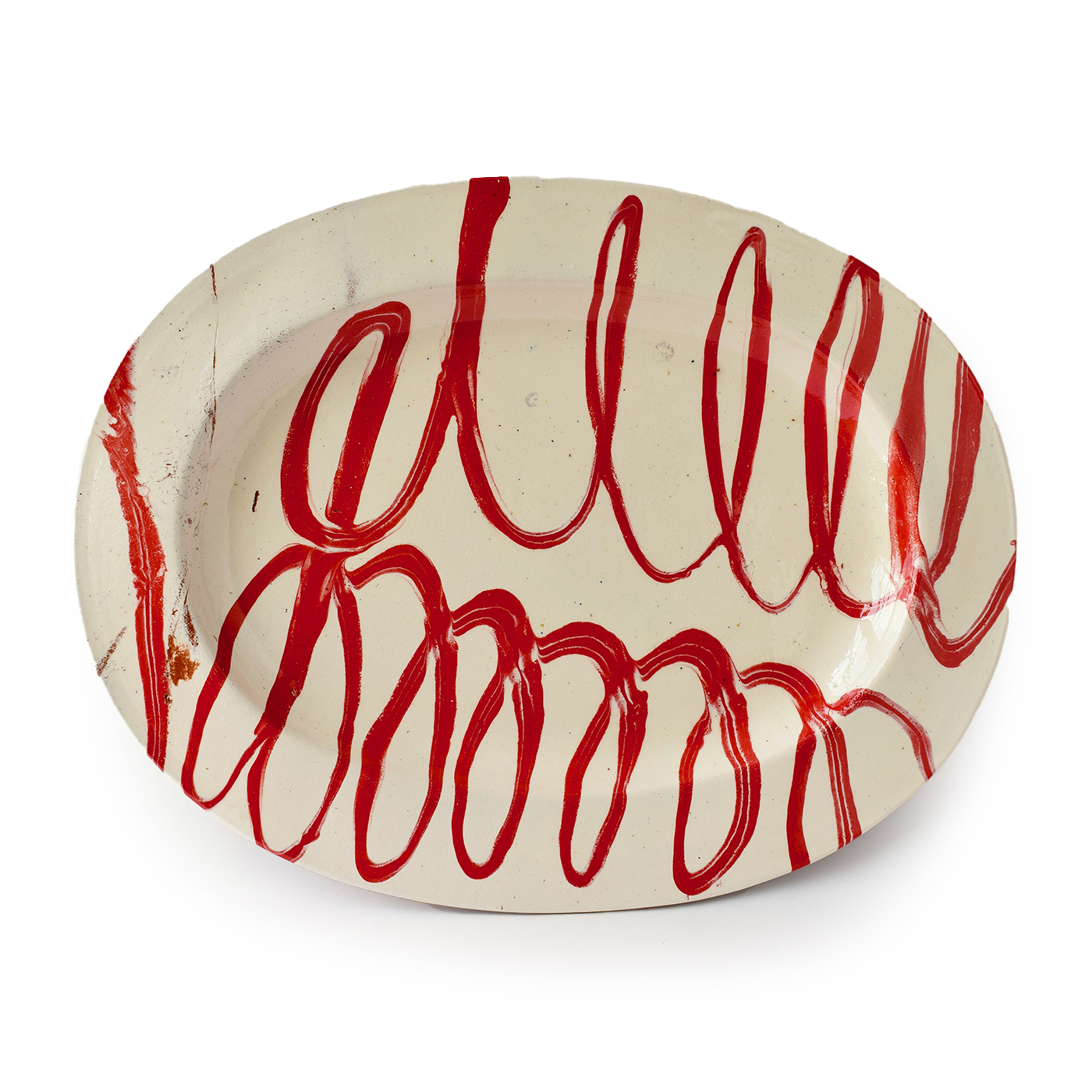
These plates form part of a dynamic series in which Philip Eglin pushes the expressive potential of slipware to its limits. Built on the familiar format of the oval plate, the pieces carry a raw, painterly energy, where gestures feel immediate, even confrontational, as if drawn directly onto the surface in a single, urgent movement.
At their core, however, these works remain deeply rooted in the traditions of the British potteries. Slip, a liquid clay used historically to decorate earthenware, has long been applied through trailing, pouring and combing to create pattern and image. Eglin adopts this language but disrupts its expected order, replacing symmetry and ornament with a more instinctive, almost graffiti-like mark-making. There is a deliberate tension between control and abandon. The bold red ground intensifies the physicality of the surface, while the drawn elements seem to resist containment within the plate’s boundary. In this way, Eglin reanimates a centuries-old vernacular tradition, one historically tied to rural workshops and functional wares and recasts it through a contemporary lens.
Across the series, the plate becomes both canvas and object. Eglin’s practice often draws on diverse cultural references and the visual noise of modern life, combining them in ways that feel layered and immediate. Here, that sensibility finds a particularly direct expression, where the energy of painting meets the weight and history of clay. The result is work that feels both grounded and rebellious: a reinvigoration of slipware that is as much about attitude as it is about tradition.
Philip Eglin’s work is held in numerous public collections in the UK and internationally.
About Philip Eglin
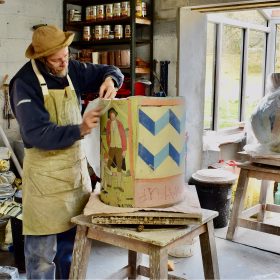
Philip Eglin (b.1959, Gibraltar) studied at Staffordshire Polytechnic and the Royal College of Art, London. He was awarded the prestigious Jerwood Prize for Applied Arts in 1996, and The Scottish Gallery has exhibited his work regularly since the 1980s.
Related Items
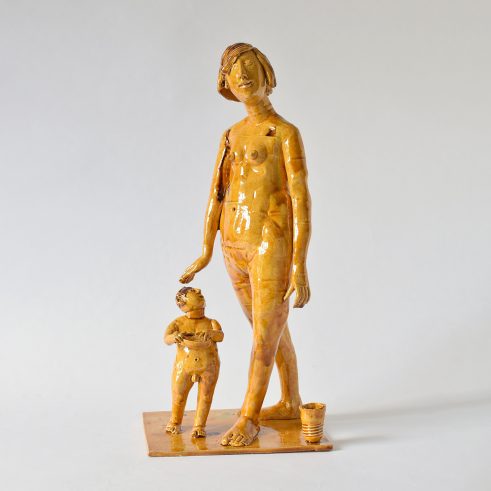
Venus et Amour, 2024
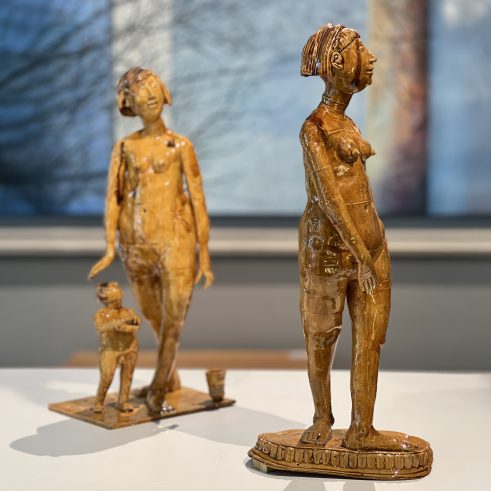
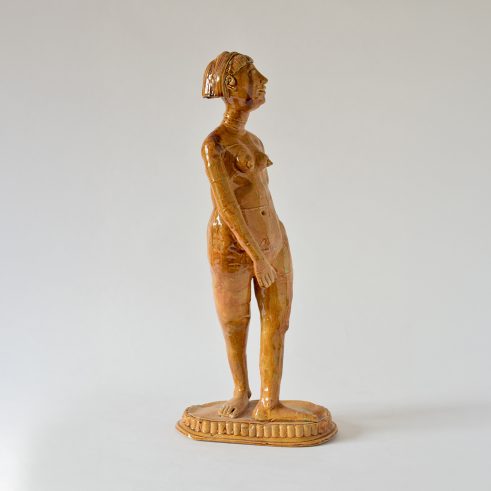
Venus et Amour and Standing Nude, 2024