Close
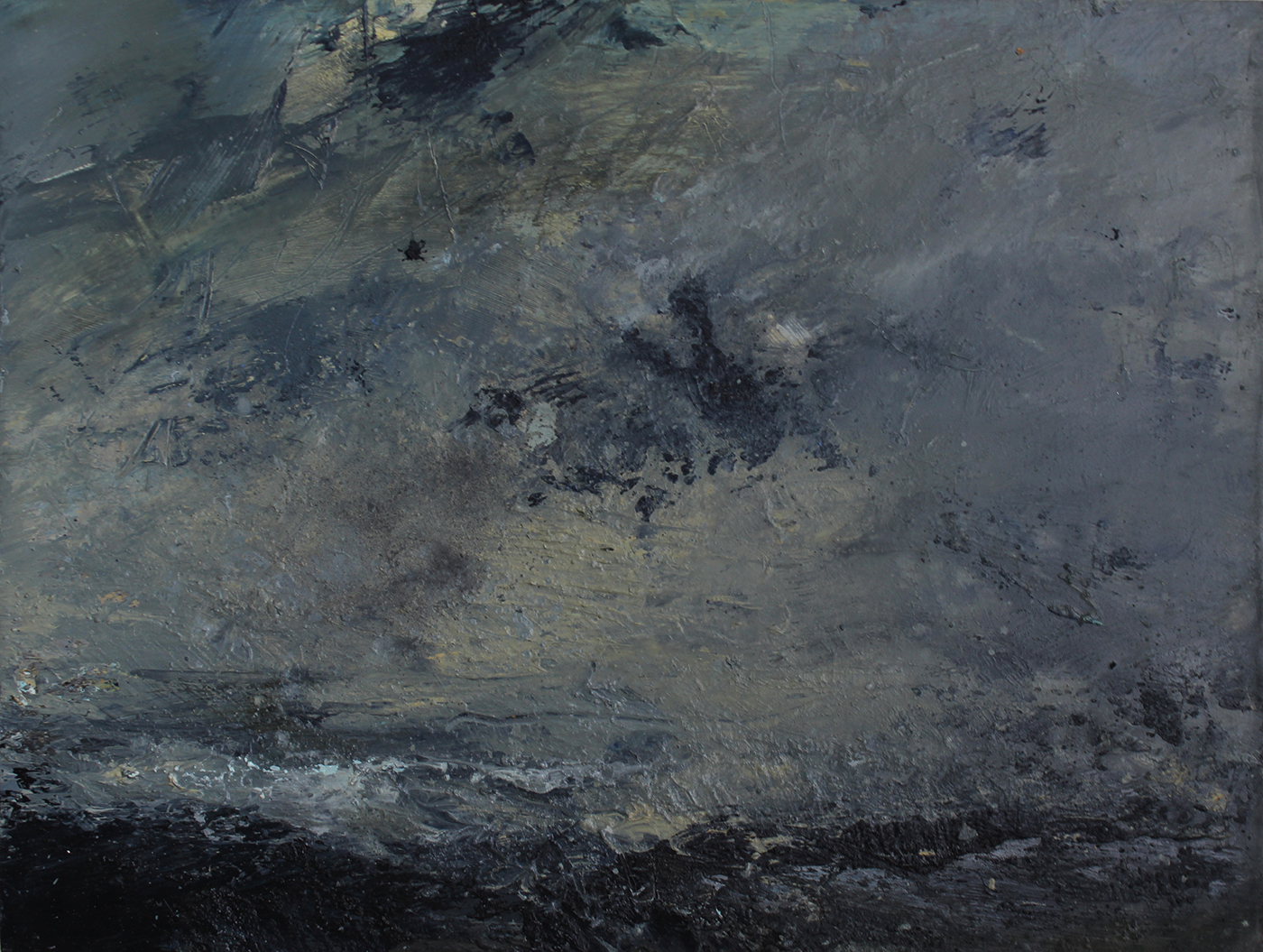
framed dimensions: 43 x 52 cm
Janette Kerr’s work captures the shifting, transitory nature of the sea and weather. Her paintings are grounded in direct experience, an engagement with the raw, ever-changing forces of nature. Kerr studied fine art (completing a PhD in Fine Art at the University of the West of England in 2005) during which she deepened her thinking around the making of work in extreme and mutable landscapes. She also taught fulltime as a lecturer in painting, printmaking and drawing at the City of Bath College from 1980 to 1993, which helped shape her commitment to process, pedagogy and the dialogue between observation and material. Over the years, Kerr has held roles of institutional leadership (including serving as President of the Royal West of England Academy between 2011-2016) and she remains an Honorary Academician of the RSA, Edinburgh. Described by Brian Fallon, Chief Critic of the Irish Times, as ‘the best painter of the sea in these islands,’ Kerr has long been drawn to the edges of land and sea, to exposed headlands and wind-swept waters. Her process reflects this: My process of making paintings involves extremes and instabilities: peripheries and promontories – places of rapid change and shifts, both physically and meteorologically. Over the past fifteen years Kerr has focused primarily on Shetland and the far north, travelling to remote and weatherworn places including Norway, Svalbard, Iceland and Greenland. Immersion is central to her practice: walking, observing, and making work en plein air as a way of understanding and responding to landscape before returning to the studio.
Janette Kerr divides her time between Shetland and Somerset. She exhibits regularly across the UK, and her work is represented in private and public collections nationally and internationally.
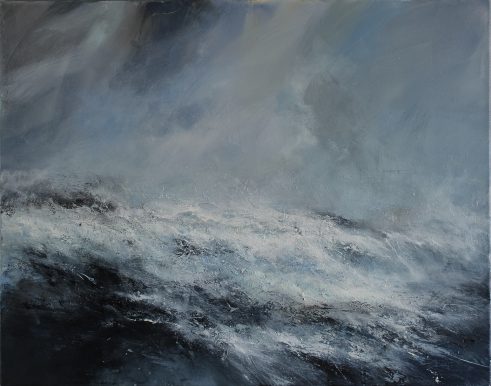
My paintings emerge from responses to sound and silence within the landscape; they explore movement and the rhythms of sea and wind, swelling and breaking waves, the merging of spray with air, advancing rain and mist, glancing sunlight – elements that seem to touch on something intangible.
I have tried to embed myself within the landscape and culture of Shetland, exploring its historical relationship with the sea – through its fishing traditions, stories and lived realities – and to engage with oceanographic ideas through conversations with Norwegian scientists studying the unpredictable nature of waves and wind across shared waters. The landscapes I draw from are full of histories and memories, of people and natural forces, reflecting a continual mutability of place.

Struggling to find that perfect gift? We have the solution! A Scottish Gallery Gift Voucher is the perfect gift for friends, family, customers and colleagues.

Own Art is a national initiative that makes buying contemporary art and craft affordable by providing interest-free credit for the purchase of original work.