
Crab Apple and Chilli Jelly
I had so many crab apples this past year that I repeated this process three times, increasing the amount of chilli with each batch. The recipe below produces a mild to medium heat.
Ingredients
4 lb crab apples
Water
Sugar (1 lb sugar per pint of strained juice)
Chilli flakes or 3 fresh hot chillies, chopped (seeds left in)
Equipment
Sterilised jars with screw tops
Large saucepan
Jelly bag or sieve lined with clean muslin
Jam thermometer (helpful but not essential)
Method
Wash the crab apples, quarter them and place in a large pan. Add enough water just to cover the fruit.
Bring to the boil, then simmer gently with the lid on for around 35 to 40 minutes, until the apples have broken down into a soft pulp.
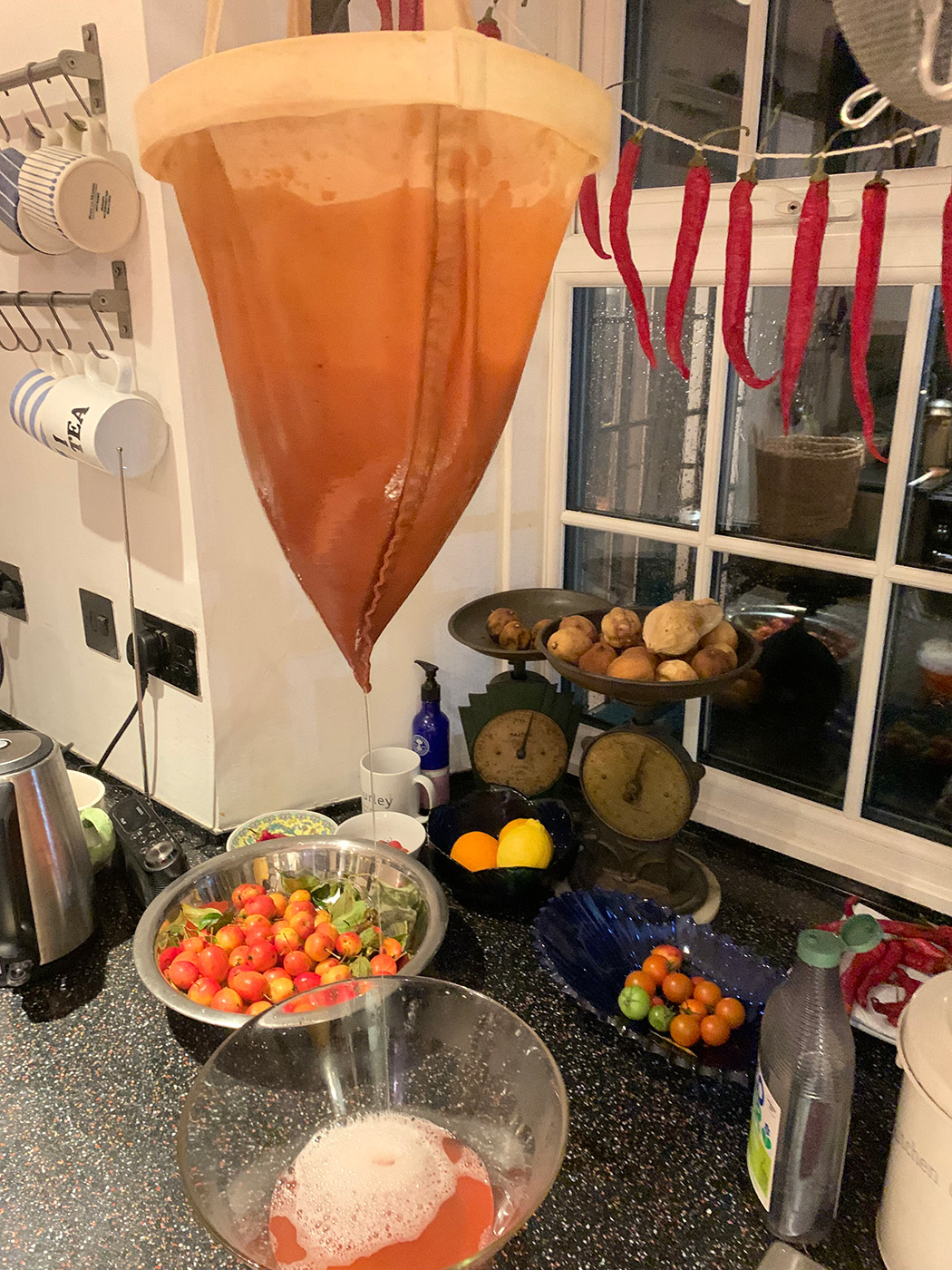
Allow the mixture to cool slightly, then transfer it to a jelly bag or muslin-lined sieve suspended over a bowl. Leave to drip for several hours, or preferably overnight. Avoid squeezing the pulp, as this will make the jelly cloudy.
Measure the strained liquid.
Use the ratio of 1 lb sugar to 1 pint of liquid.
Return the measured juice and sugar to a clean pan and heat gently, stirring until the sugar has dissolved. Add the chilli.
Bring gradually to the boil and maintain a steady rolling boil, skimming off any scum that forms on the surface.
When the thermometer approaches jam setting point, test by spooning a small amount onto a chilled saucer. If the liquid forms a skin that wrinkles when pushed with your finger, it is ready.
Allow to cool slightly, then pour into sterilised jars and seal immediately. Label with the contents and date.
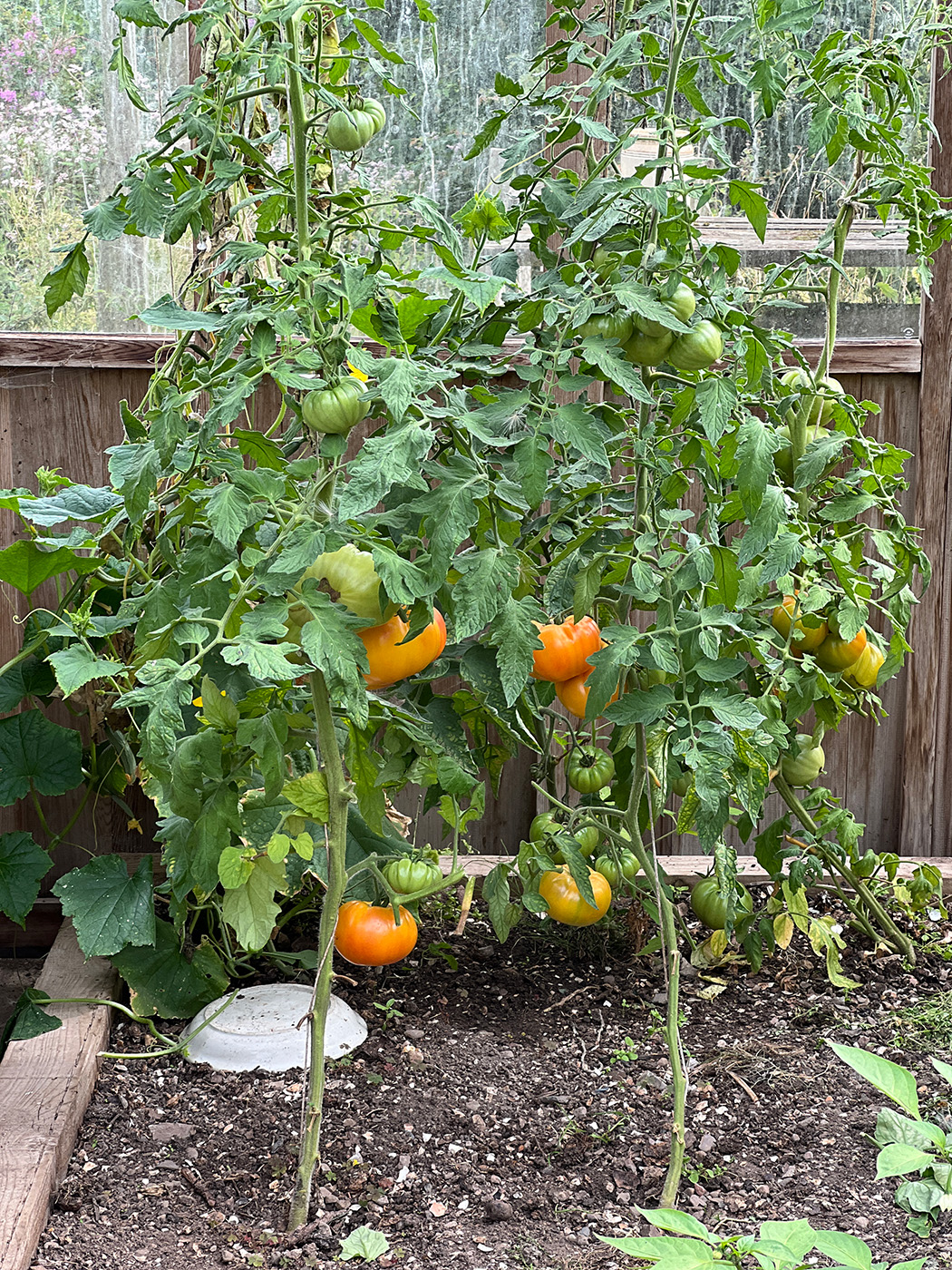
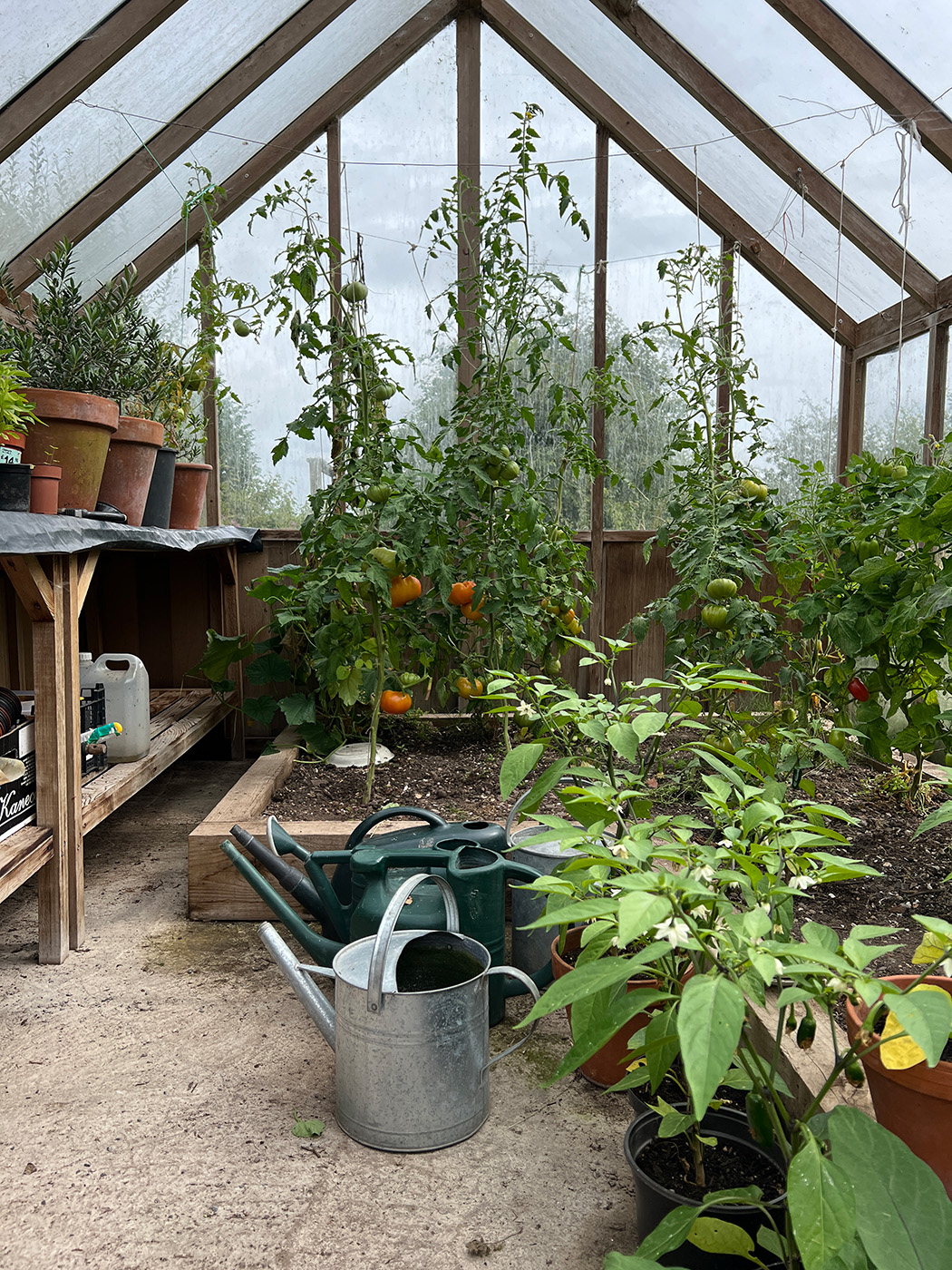
Green Tomato Chutney
This recipe uses up green tomatoes that will not ripen at the end of the season, along with apples from the autumn harvest.
It follows a recipe from my late mother’s Scottish Women’s Rural Institute Cookbook (c.1960), so the measurements remain in pounds and ounces.
Ingredients
4 lb green tomatoes
4 lb cooking apples (Bramley if available)
1 lb onions
8 oz sultanas
1 teaspoon salt
1 oz ground ginger
1 lb 8 oz brown sugar
1 pint vinegar
2 oz mustard seeds (tied in a muslin bag)
Equipment
Large sterilised jars
Clean muslin
Elastic bands
Method
Prepare the apples and tomatoes and coarsely mince or finely chop them.
Place all ingredients in a large pan, including the muslin bag of mustard seeds.
Simmer gently until the mixture becomes thick and the fruit is tender.
Remove the muslin bag and discard.
Spoon the chutney into sterilised jars while still hot and seal with lids.
Label and date the jars.

Bramble, Apple and Walnut Crumble
Fruit Filling
Approx. 2 lb / 900 g Bramley apples, peeled, cored and roughly chopped
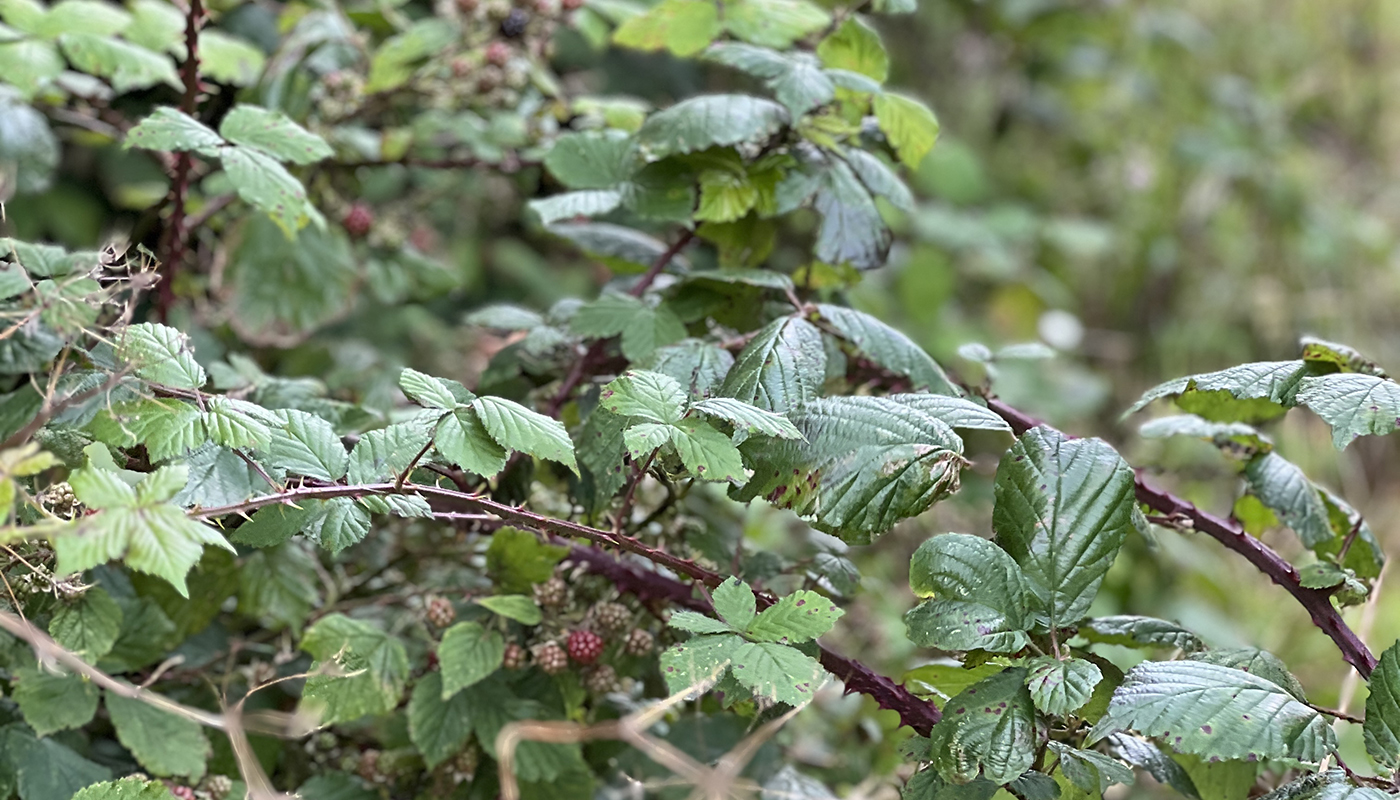
Approx. 1 lb / 450 g brambles, washed
2 tablespoons granulated sugar, or to taste
To wash brambles, place them gently in a bowl and run cold water slowly over them, skimming off any debris. Soak for about 20 minutes, remove any remaining debris and drain.
Crumble Topping
8 oz / 225 g wholemeal flour
1 level teaspoon baking powder
3 oz / 75 g butter
5 oz / 150 g soft brown sugar
3 oz / 75 g walnuts, roughly chopped
Method
Preheat the oven to 180°C (160°C fan).
Place the prepared apples and brambles in a deep pie dish or casserole dish and sprinkle with the sugar.
In a bowl, mix the flour and baking powder. Rub in the butter until the mixture resembles coarse crumbs.
Stir in the brown sugar and chopped walnuts.
Spread the crumble mixture evenly over the fruit without pressing it down.
Bake for about 40 to 45 minutes. If using a fan oven, check after around 35 minutes.
The crumble should be a pale caramel brown on top.
Apple and Almond Cake
Ingredients
2 large eggs
225 g / 8 oz caster sugar
140 g / 5 oz butter, softened
112 g / 4 oz self-raising flour
112 g / 4 oz ground almonds
2 level teaspoons baking powder
1 teaspoon almond essence (optional)
315 g / 11 oz apples, peeled, cored and cut into thick chunks
50 g / 2 oz butter (for frying apples)
2 tablespoons granulated sugar
25 g / 1 oz flaked almonds
A splash of milk, if needed
Method
Preheat the oven to 160°C (140°C fan).
Grease a 20 cm / 8 inch loose-bottomed cake tin and line the base with greaseproof paper.
Melt the 50 g butter in a non-stick pan, add the sugar and heat gently until dissolved. Add the apples and cook gently until lightly golden.
In a large bowl beat together the eggs, softened butter, caster sugar, flour, baking powder, ground almonds and almond essence until smooth. Add a splash of milk if the mixture seems too dry.
Spread about half the cake mixture into the base of the prepared tin.
Spoon the apples and their buttery juices over the centre. Dot the remaining cake mixture over the apples and smooth lightly.
Sprinkle with the flaked almonds.
Bake for 40 to 60 minutes, depending on your oven. The cake should be golden and beginning to pull away from the sides of the tin.
Allow to cool for about 15 minutes before serving. It is particularly good served warm with cream.
Apple Cider Vinegar
Nothing could be simpler than this recipe. It requires very little effort but does take time and space while it ferments. The process happens in two stages: apple cider, then apple cider vinegar.
Ingredients
Apples (any variety), chopped, with any bruised or rotten parts removed
Water (preferably unchlorinated)
Sugar (optional, 1 level tablespoon per pint of water)
Equipment
Large sterilised jars
Clean muslin
Elastic bands
Method
Chop the apples into chunky pieces.
Fill a sterilised jar about three quarters full with the chopped apples. Dissolve the sugar in the water if using it, then pour over the apples until the jar is full.
Ensure the apples are fully submerged, using a smaller jar or non-metallic weight if necessary.
Cover the jar with muslin and secure with an elastic band. Leave somewhere dark at room temperature.
Check the jar weekly to ensure the apples remain submerged. Some recipes suggest stirring the mixture, but I generally leave it undisturbed.
After four to six weeks the apples should sink to the bottom. Strain the liquid into a clean jar and discard or compost the apples.
Cover the liquid again with muslin and leave for a further few weeks. A cloudy jelly-like layer, known as the mother, may form on the surface. This is completely normal.
When the vinegar smells sharp and tastes right to you, remove the mother and decant the vinegar into clean bottles.
There are no strict rules with this process. Each batch will behave slightly differently depending on temperature, apple variety and other conditions, so fermentation times may vary.

