Close
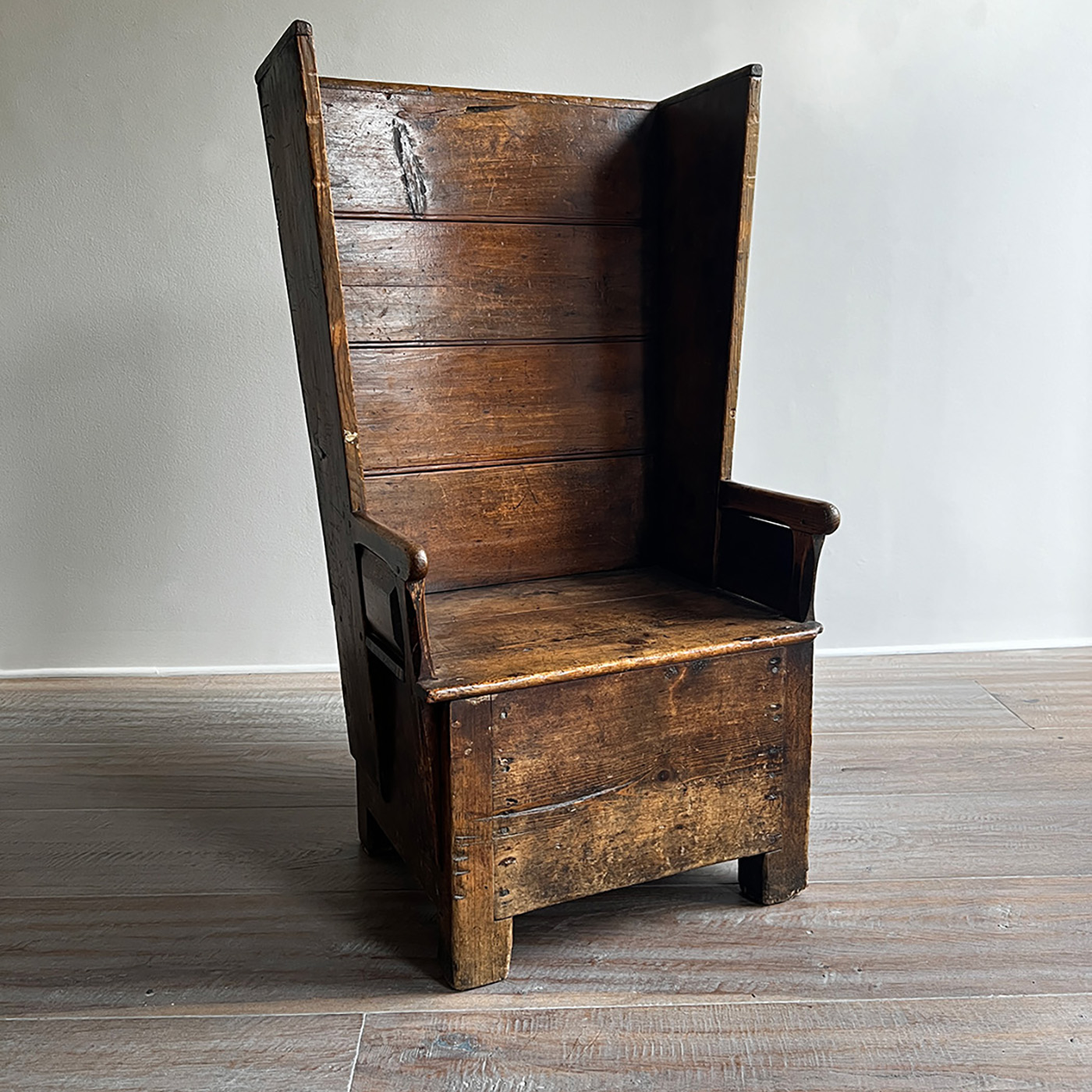
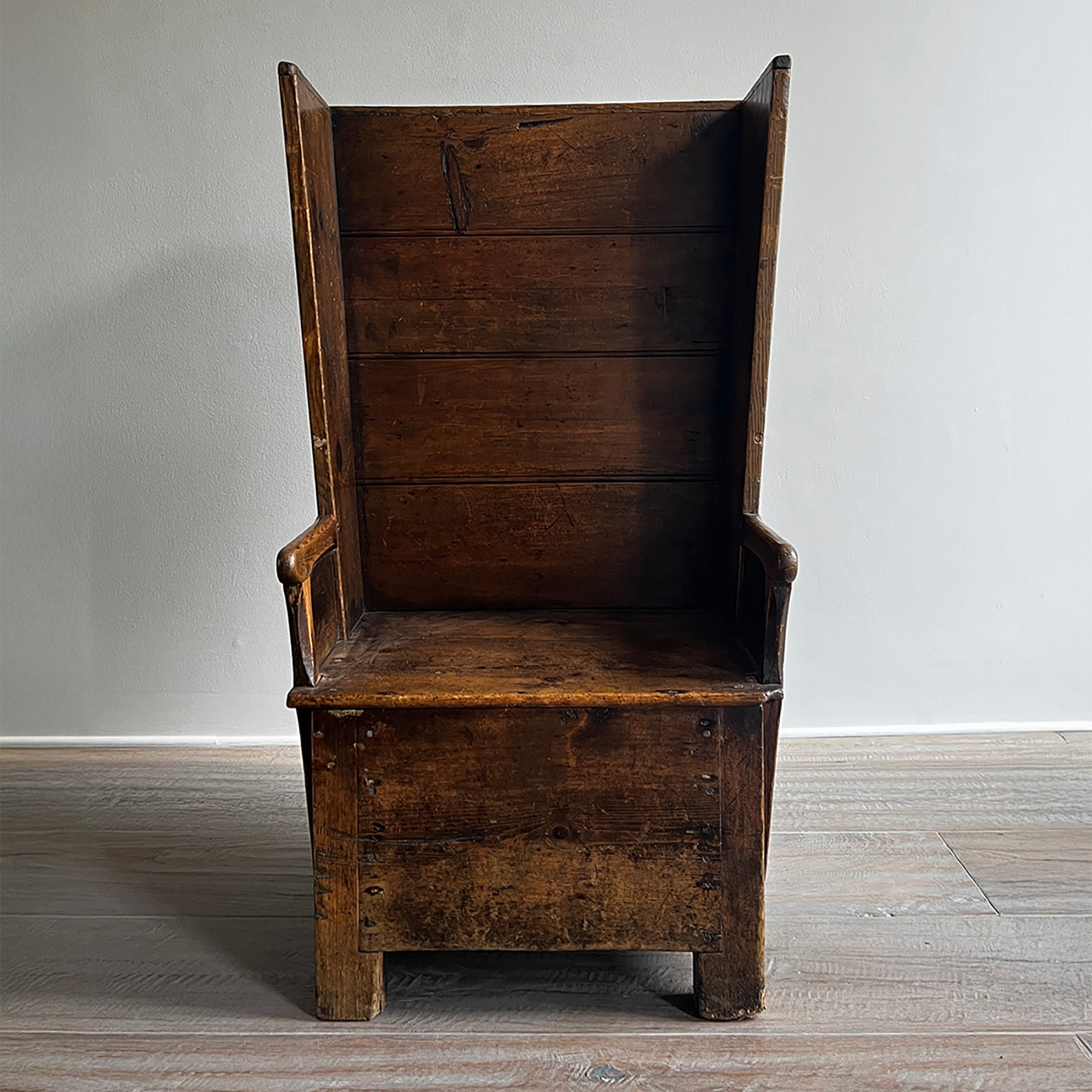
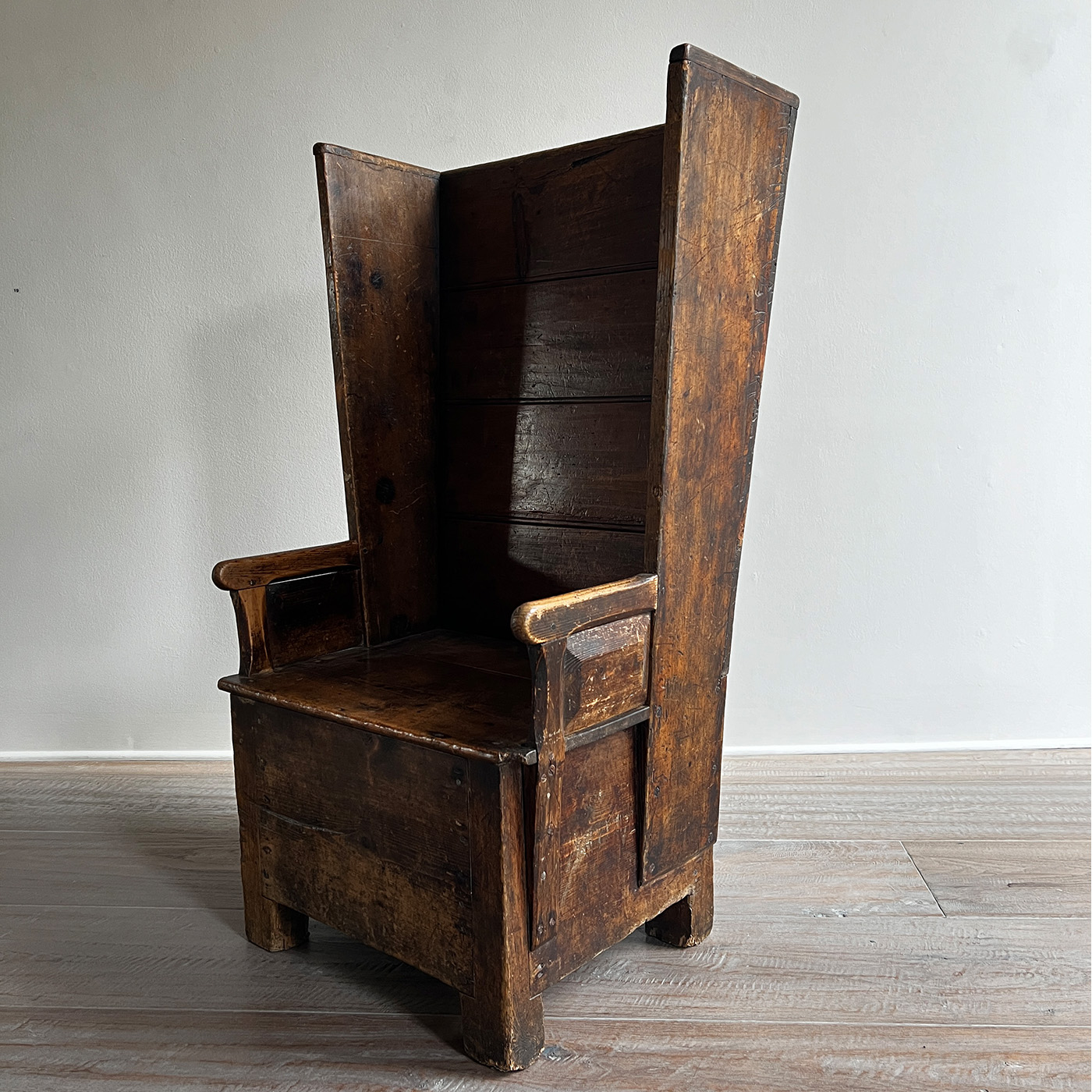
This rare boarded Orkney chair predates the more familiar woven examples. While sharing features with lambing chairs found elsewhere in Britain, such as those from Lancashire, it possesses a distinctly Northern Isles character, with related examples recorded in Shetland and Scandinavia. The enclosed wings and high back, together with the solid panelling below the seat, derive from medieval seating forms designed to shield the sitter from cold and draughts in simple croft interiors. These chairs were often used during the lambing season, placed in barns to allow crofters to keep vigil over their ewes.
Typically made by a local wright for everyday use, such chairs are notable for their plain, unadorned appearance. The late collector Peter Powell captured their character perfectly when he observed that it invites you to sit in it, but in a Presbyterian sort of way.
A very similar example, held by the Orkney Farm and Folk Museum, Kirbuster, is illustrated in Bernard D. Cotton’s Scottish Vernacular Furniture, where he notes that such boarded chairs display less exacting constructional details than those found in the straw backed chairs. Locally, these Orkney chairs were known as heided stuls.


Struggling to find that perfect gift? We have the solution! A Scottish Gallery Gift Voucher is the perfect gift for friends, family, customers and colleagues.

Own Art is a national initiative that makes buying contemporary art and craft affordable by providing interest-free credit for the purchase of original work.