Close
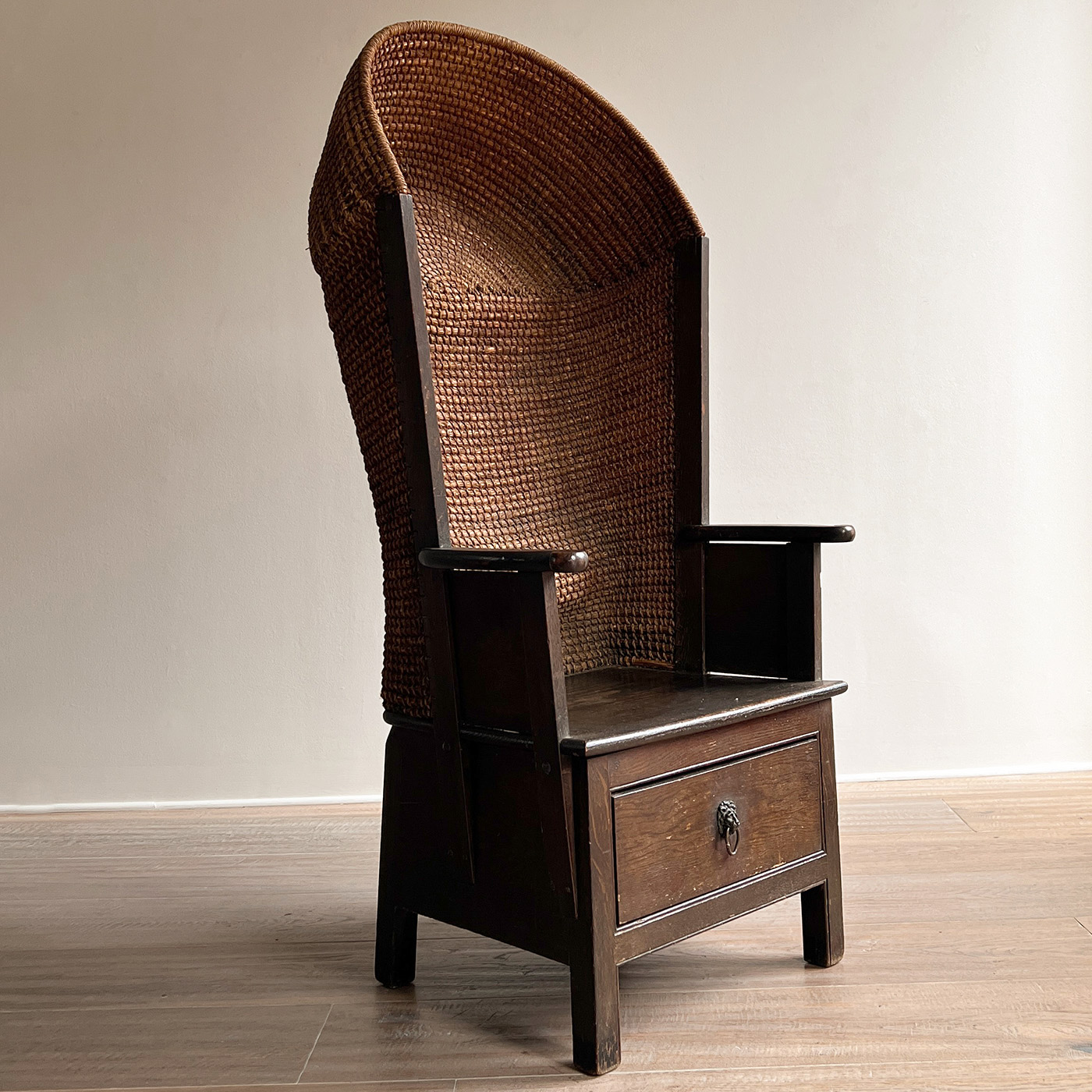
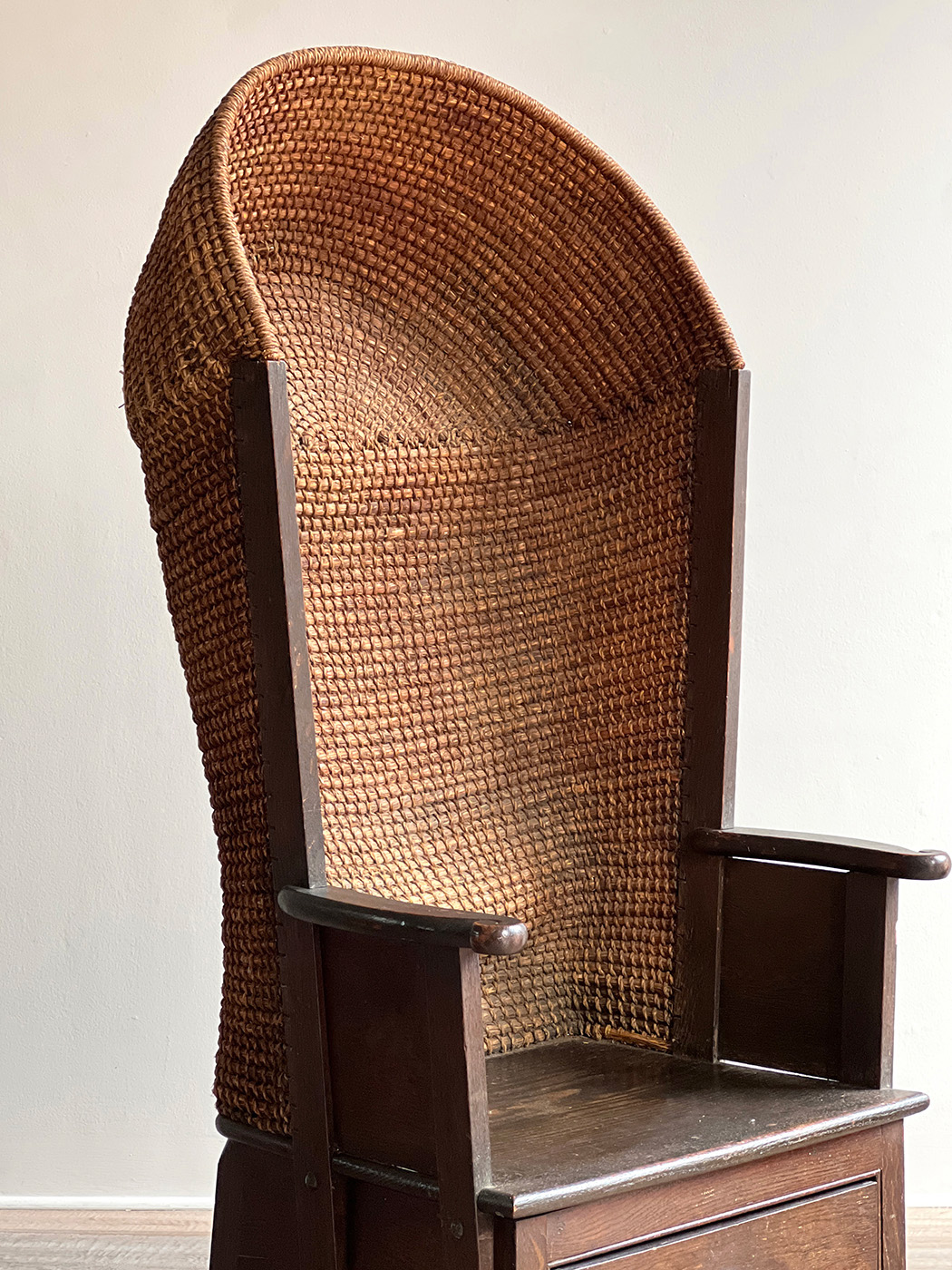
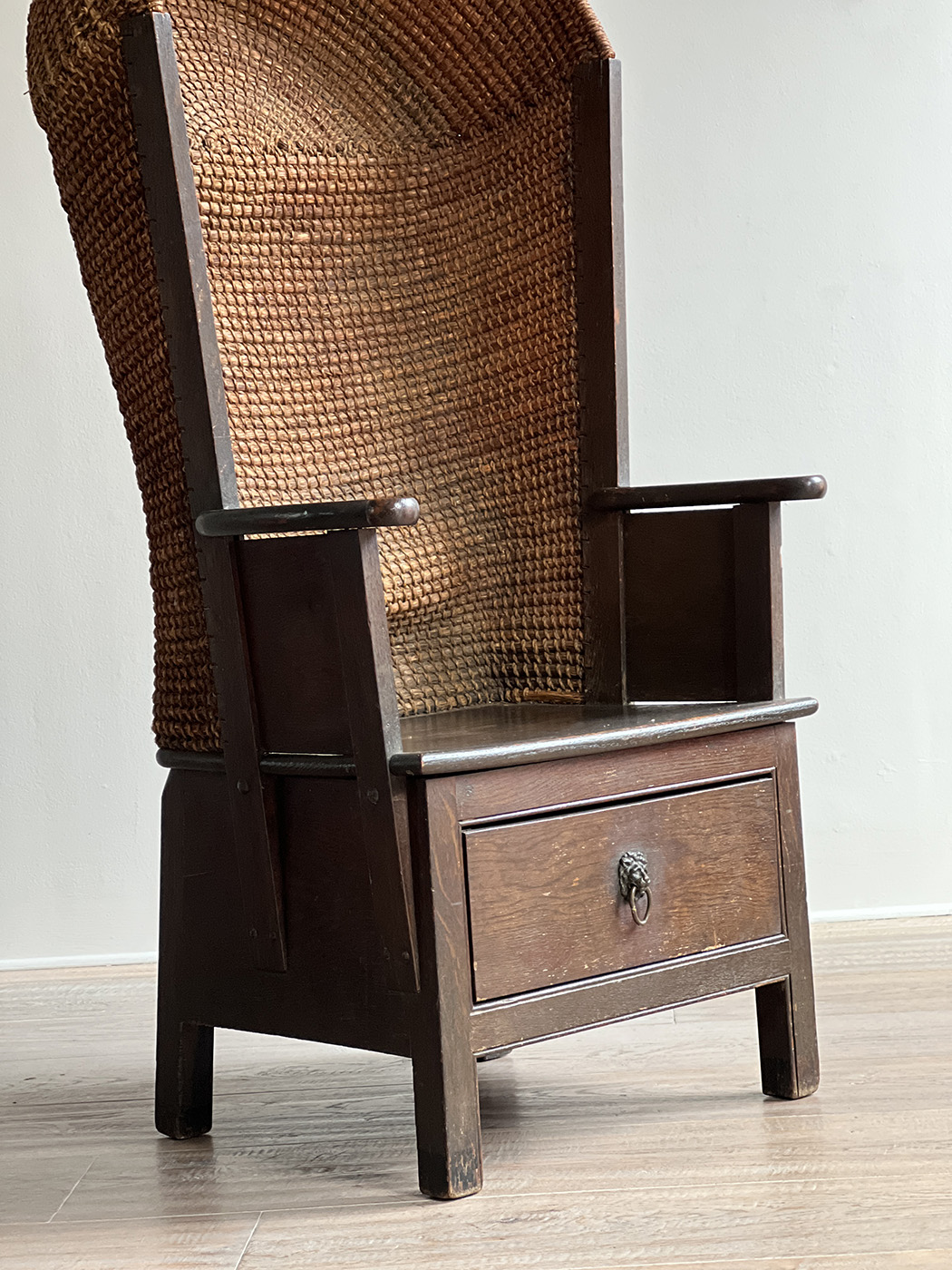
In The Northern Isles exhibition exhibition, we have an example of a full-size hooded Orkney chair with an under-seat drawer, dating to circa 1890. The form is closely aligned with the late nineteenth century designs popularised by the Kirkwall chairmaker David Munro Kirkness, whose workshop played a pivotal role in standardising and commercialising the Orkney chair. Key features include the enclosed hooded back rising above a straw weave, characteristic scrolled arms, square legs with stretchers, and a finely constructed drawer beneath the seat. The patina on both wood and straw is consistent and well-aged, lending visual unity to the piece. The presence of original finish wear, repair history in matching timber, and overall craftsmanship suggest a high-quality example of the late Victorian Orkney tradition.
The Orkney chair is one of the most recognisable pieces of Scottish vernacular furniture, originally valued not for style but for practicality. Made in a (mostly) treeless landscape, its distinctive high straw back offered essential protection from wind and cold, using driftwood for the frame and tightly coiled oat straw shaped entirely by the maker’s eye. Marram or bent grass secured the coil to the uprights, creating a strong, insulating barrier. Early chairs often had solid, boxed-in seats designed to block draughts and reflect heat from the fire. Some included small drawers
for storing documents, a bible, or even a bottle of whisky. Hooded versions – heidit stuls – provided even greater shelter, and the chairs came in sizes from child to larger domestic versions, with occasional rocking examples. Though now highly collectable, with examples in the V&A, London, Orkney chairs began as functional household objects shaped by climate, resourcefulness, and local craftsmanship.


Struggling to find that perfect gift? We have the solution! A Scottish Gallery Gift Voucher is the perfect gift for friends, family, customers and colleagues.

Own Art is a national initiative that makes buying contemporary art and craft affordable by providing interest-free credit for the purchase of original work.