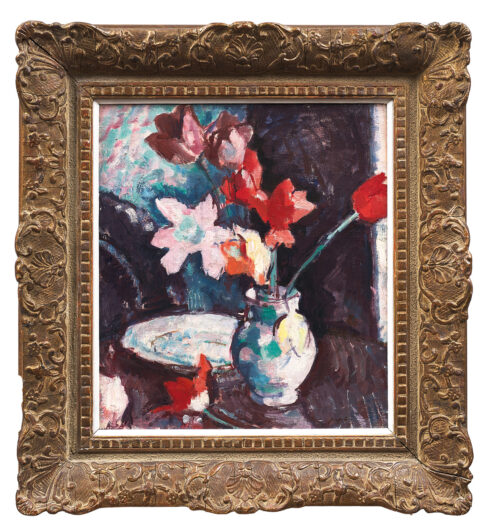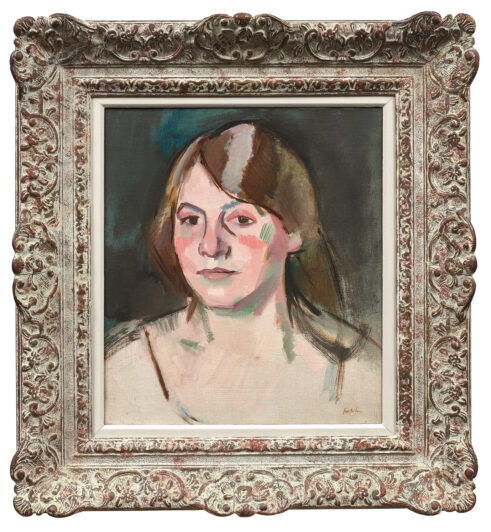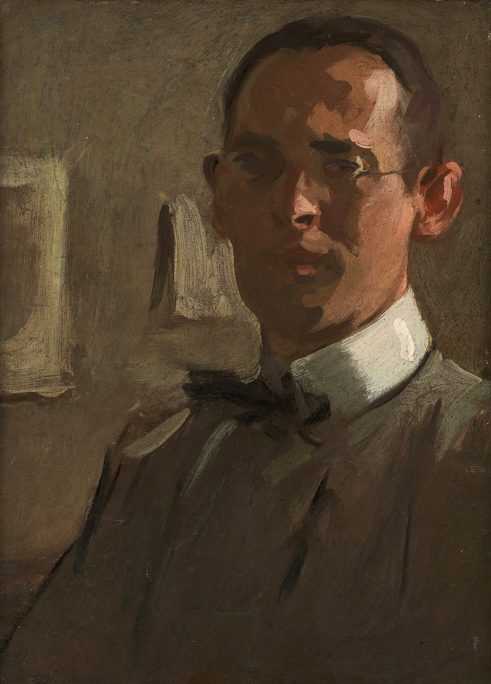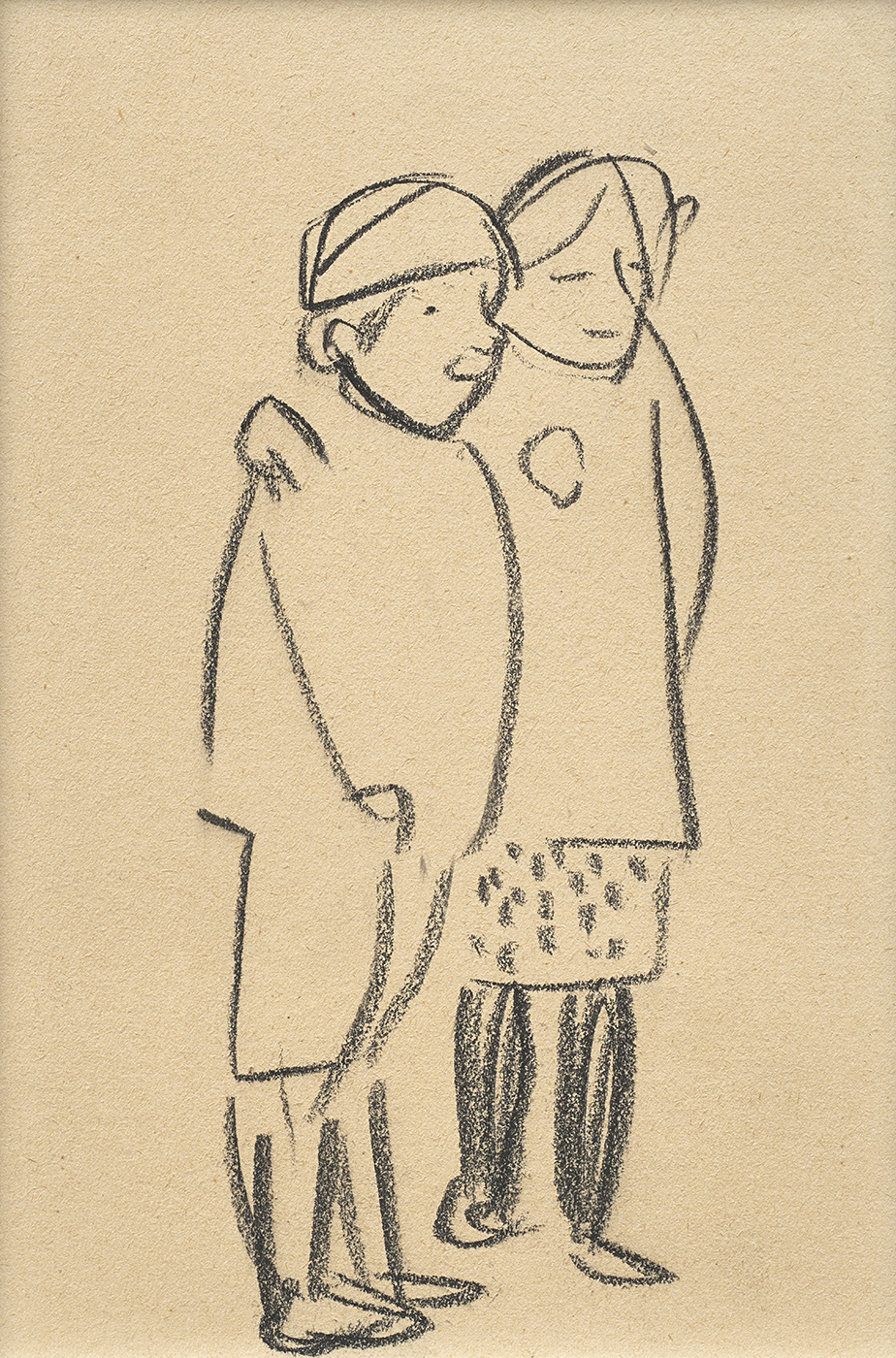
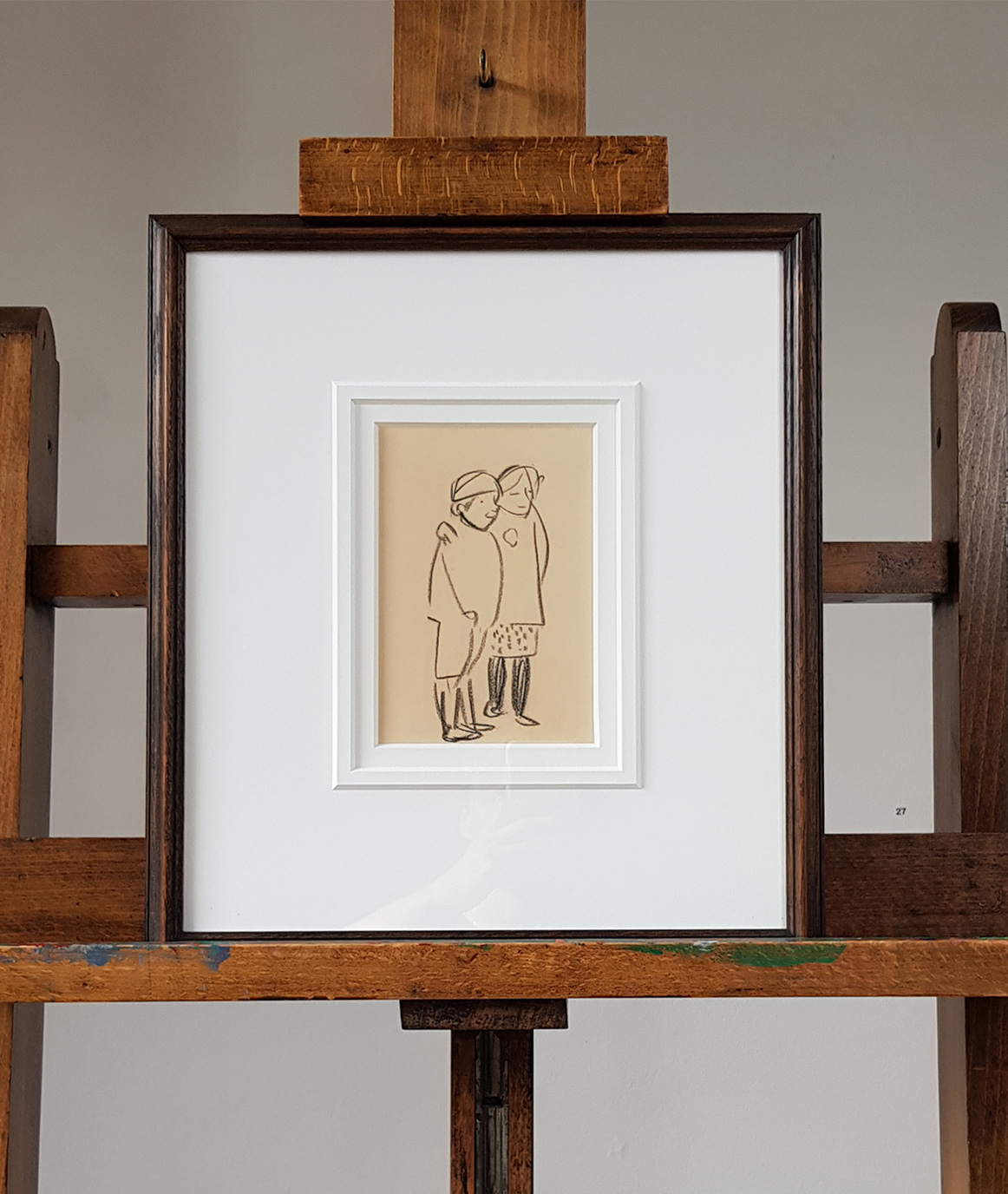
EXHIBITED:
S.J. Peploe Drawings, The Scottish Gallery, Edinburgh, 1994, Cat. 1
ILLUSTRATED:
Guy Peploe, S.J. Peploe, Mainstream Publishing, 2000
Guy Peploe, S.J. Peploe, Lund Humphries, 2012
There is a family story of how S.J. Peploe used to draw a pig, blindfolded, without lifting the pen from the paper, before putting in the tail with a flourish. Drawing was enormously important to him; the cutting edge of his skill, and he practised incessantly. He filled sketchbooks as he combed the countryside looking for subjects. The drawings which are preparatory for paintings, are very often framed on the page, with his pencil or Conté pen, to suit a format of canvas or board, and there might be several sketches on a page.
Although no very early work survives, it is known that Peploe drew all his life. In the early 1890s, he worked with pastel on coloured paper, describing a farmyard, a girl at a dressing table, or Newhaven fisherwives, as in a splendid drawing in the Kirkcaldy Collection. These rare works are suggestive of an earlier period influenced by Whistler. His first exhibited work, prosaically titled Charcoal Drawing, in the Glasgow Institute in 1896, shows that from the start he saw fit to exhibit drawings. His first two exhibitions at The Scottish Gallery, in 1903 and then in 1909, included as many drawings as paintings. He would carry a sketchbook with him wherever he went making quick, sharply observant drawings of street life in Edinburgh and Paris. With a few deft strokes of his Conté he could capture the essence of a moment, or the character of a stranger.
About S.J. Peploe

Born in 1871 in Edinburgh, S.J. Peploe is the senior of the four artists known as The Scottish Colourists. He lived in Paris from 1910 until 1912, where his work changed radically from paintings reminiscent of Manet and Sargent to brilliant Fauvist works which placed him in the vanguard of British Modernism.