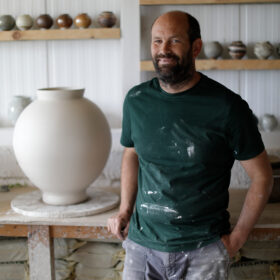
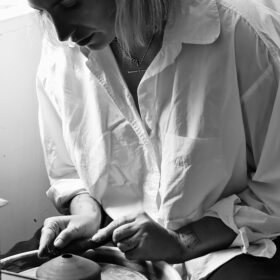
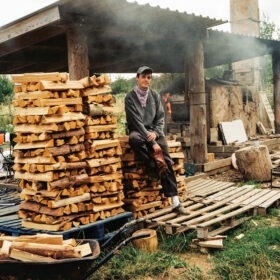
Originally from Birmingham and now based in South Oxfordshire, Simon Horton belongs to a new generation of potters working within the rich tradition of British studio ceramics. Self-taught, he refined his practice through time spent at the historic Winchcombe Pottery, one of the most significant centres of studio pottery in Britain and a place associated with the pioneering potters Michael Cardew and Ray Finch.
Working primarily in stoneware, Simon creates vessels intended to become part of everyday life. His influences are wide-ranging, from medieval English slipware to early Chinese and Korean ceramics, yet his work is united by a deep appreciation for form, proportion and function. The pots he most admires are quiet, understated and modest, qualities that are evident throughout his own practice. Much of Simon’s work is fired in a small self-built gas kiln, using reduction firing techniques and glazes developed through years of experimentation. Wood ash and other naturally occurring materials are often incorporated into his glazes, creating surfaces of remarkable depth and subtle variation.
The firing process plays a central role in his work. Whether using gas or wood, Simon embraces the unpredictability of the kiln, understanding that flame, ash and atmosphere leave their own unique imprint on every pot. No two pieces are ever quite the same. Rather than seeking perfection, he values the individuality that emerges through making, believing that the marks left by the process are part of what gives a pot its life and character.
There is a quiet confidence to Simon’s pottery. These are not objects that demand attention; instead, they reward close looking and repeated use. In a culture often drawn to novelty and speed, his work reminds us of the enduring appeal of well-made things. Whether holding flowers, serving food or simply sitting on a shelf, his pots bring a sense of balance, warmth and permanence to everyday life.
Like the finest examples of British studio pottery, Simon’s work is rooted in the belief that beauty and utility are inseparable. His vessels are made not only to be admired, but to be lived with, gathering meaning through daily use and becoming part of the rhythms of a home.