- Various Artists
The Northern Isles
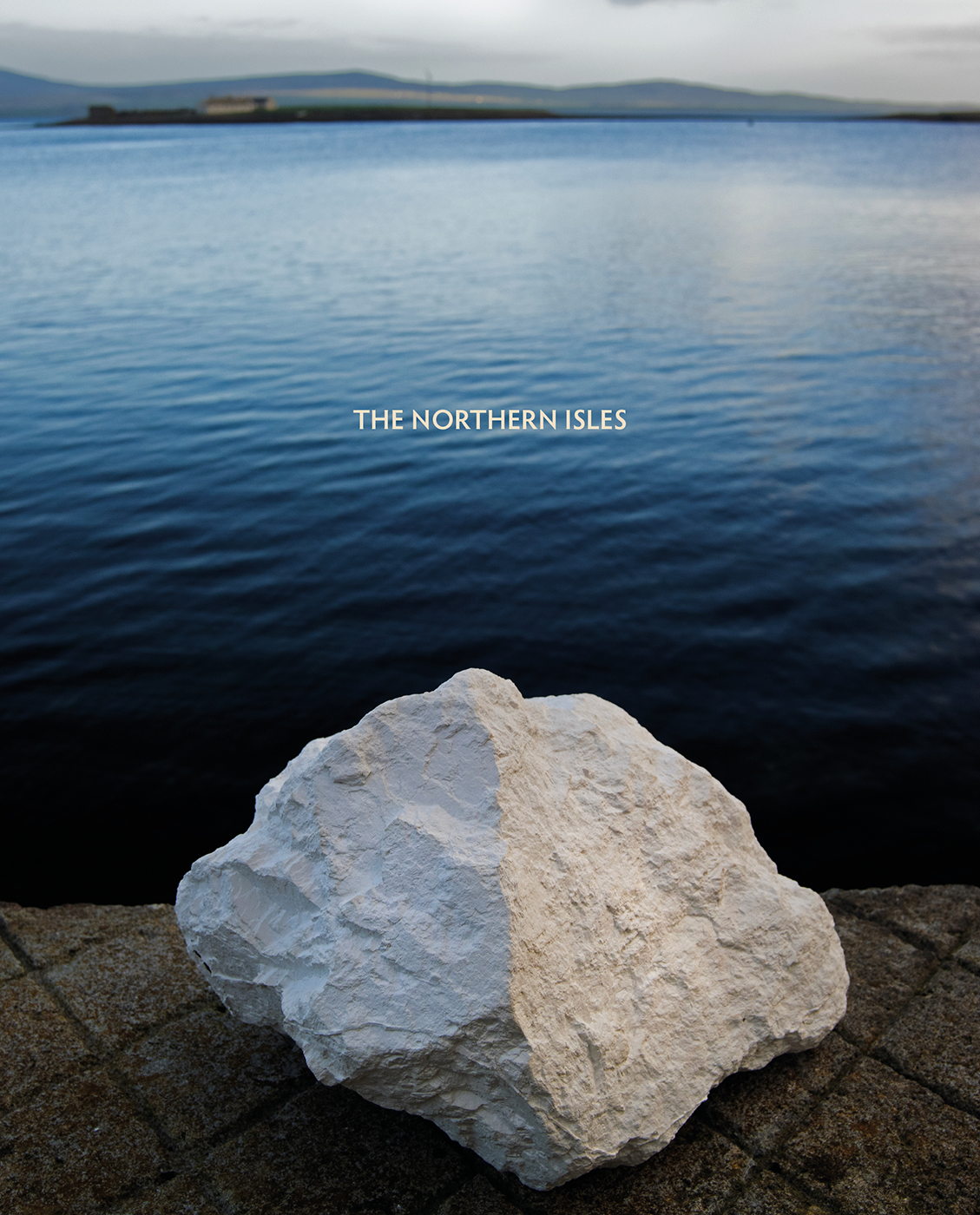
The Northern Isles is accompanied by a major publication bringing together artists responding to Orkney and Shetland, places shaped by light, weather, and the meeting of land and sea. It reflects on continuity and change, craft and resilience, and the enduring relationship between people, place, and history in these northern archipelagos.
About Megumi Barrington-Uenoyama
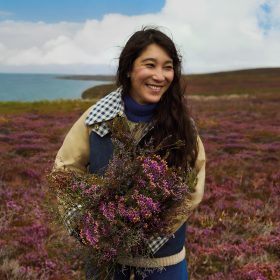
I am a Japanese artist who is based in Orkney, my work reflects both my Japanese heritage and my interest in the landscape and natural history of Orkney.
“The essence of Orkney’s magic is silence, loneliness, and the deep marvellous rhythms of sea and land, darkness and light” George Mackay Brown (1921-1996).
About Anne Bevan
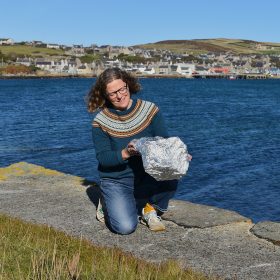
Anne Bevan often makes work connected to the sea – thinking about things we cannot see – underwater, submerged, hidden, stories and histories. She develops her ideas through a range of media and including sculpture, photography and video. Her interest in interdisciplinary and collaborative practices has seen her working with many people from different specialisms, including archaeology, anthropology, geology, marine science, creative writing, film and music. This dialogue brings new connections and conversations, along with new ways of understanding our relationship to place and the environment.
About Ingrid Budge
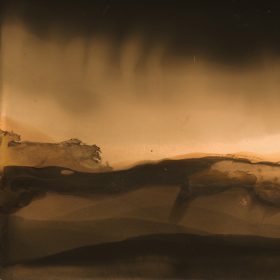
Ingrid Budge (b.1967, Orkney) is an Orcadian artist working with alternative photographic processes to create atmospheric and deeply evocative studies of landscape, memory and place. Rooted in the elemental environment of Orkney, her practice explores the shifting relationship between land, sea and sky through experimental, camera-less techniques that embrace unpredictability, chemistry and chance.
About Ruth Brownlee
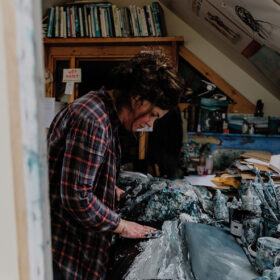
Ruth Brownlee is one of Shetland’s foremost contemporary painters, known for her expressive depictions of the island’s elemental landscape. Her paintings capture the dramatic weather, shifting light and restless sea that define life at the northern edge of Scotland. Born in Edinburgh and trained at Edinburgh College of Art, Brownlee has lived and worked in Shetland for over two decades. From her studio in South Mainland, she paints the ever-changing moods of the Atlantic, transforming raw experience into paintings that are both personal and profoundly rooted in place.
About Samantha Clark
About Victoria Crowe
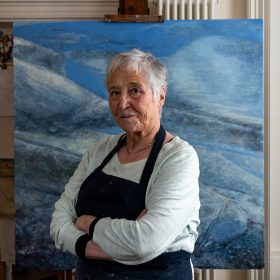
Victoria Crowe studied at Kingston School of Art from 1961-65 and at the Royal College of Art, London, from 1965-68. At her postgraduate show, she was invited by Sir Robin Philipson to teach at Edinburgh College of Art. For thirty years she worked as a part-time lecturer in the School of Drawing and Painting while developing her own artistic practice. She lives and works in West Linton and Edinburgh. Her first one-person exhibition, after leaving the Royal College of Art, was in London and has subsequently held over fifty, one person shows.
About Kate Downie

Born in North Carolina, Kate Downie is one of Scotland’s most respected contemporary painters, celebrated for a practice that moves fluidly between painting, drawing, printmaking and installation. After studying at Gray’s School of Art in Aberdeen, Downie travelled extensively, undertaking residencies and projects in the United States, England, Amsterdam and Paris. Over the past three decades she has built a distinctive body of work rooted in direct engagement with place, landscape and industry, responding intuitively to environments through colour, gesture and mark-making.
About Peter Davis

For more than forty years, Peter Davis has pursued a singular vision through the medium of watercolour, exploring the delicate intersection between artistic intent and the elemental forces of nature. His work, deeply rooted in the landscapes of the Northern Isles, conveys not only a sense of place but also an emotional and philosophical engagement with the natural world.
About Laura Drever
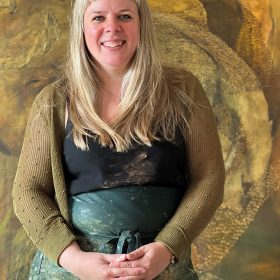
Laura Drever is an Orcadian artist whose work arises from a profound engagement with her native landscape, experienced through the act of walking, looking and remembering. Born in Kirkwall, she studied Drawing and Painting at Edinburgh College of Art, graduating in 2003 with First Class Honours. For more than two decades, she has explored Orkney’s shifting light, hills, and coastline, developing an intimate understanding of the islands’ rhythms and their continually changing atmosphere. Her practice begins outdoors, where she spends long periods walking and observing the terrain, the movement of weather, colour and the flight of birds.
About Roland Fraser
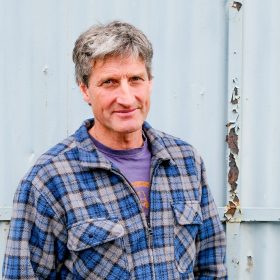
Roland Fraser creates sculptural furniture and relief panels that merge fine art with traditional craftsmanship. His work is rooted in a profound respect for materials and the histories they contain. Using timber salvaged from old furniture, farm buildings, and found structures, Fraser assembles new forms from fragments marked by time, use, and human presence. Roland is also a musician, comparing his process to composing, balancing rhythm, tension, and harmony. His constructions invite the viewer to read the language of wood not as static matter, but as a living record of use, memory, and transformation.
About Kevin Gauld

Born, raised and educated in Orkney, Kevin Gauld (b.1980) has been working with wood ever since childhood. Growing up, he could always be found in the family garden shed making wooden items. His hobby developed into his passion when he left school in 1996 at the age of 16 to launch his much-desired career as an apprentice with a well-known local furniture maker who held a reputation for high-quality craftsmanship.
About Andrea Geile
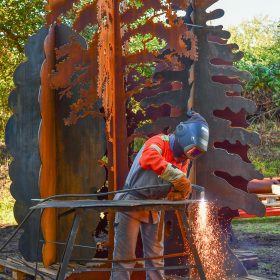
Edinburgh based artist Andrea Geile (b.1961) studied Visual Art in Hanover, Germany, and has held residencies in Orkney, Germany, France and Australia. She has been working from her Scottish studio since 1996 and has realised many public and private art commissions.
About Grace Girvan
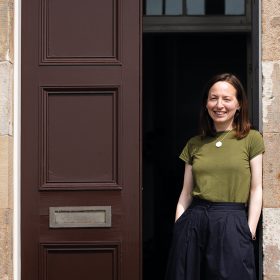
The unique landscape of the Orkney Islands provides inspiration for Grace Girvan’s jewellery. She enjoys beach combing and uses the objects that she unearths on her expeditions in her work, combining found objects such as pebbles, driftwood and shell with precious metal and enamel.
About Gail Harvey
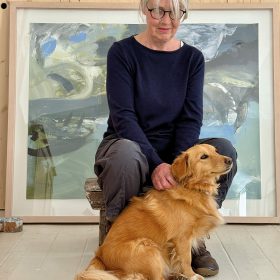
From small water based paintings created outside, to the large, oil-based canvases rendered in her studio, Gail aims to replicate the energy and changing sense of light, space and movement found in the coastal landscapes she uses as her inspiration.
About Rod Kelly
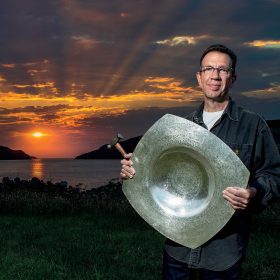
Master silversmith Rod Kelly (b.1956) creates work that carries the quiet rhythm of time and tide. Living and working by the sea in Shetland, he draws daily inspiration from the shifting light, weather, and wilderness around him. It can’t help but feed in, he says, because my studio overlooks the sea and the sea changes every day.
About Janette Kerr
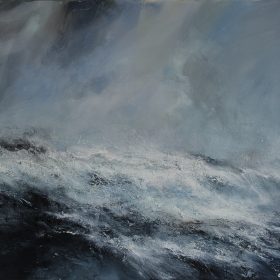
Janette Kerr’s work captures the shifting, transitory nature of the sea and weather. Her paintings are grounded in direct experience, an engagement with the raw, ever-changing forces of nature. Kerr studied fine art (completing a PhD in Fine Art at the University of the West of England in 2005) during which she deepened her thinking around the making of work in extreme and mutable landscapes. She also taught fulltime as a lecturer in painting, printmaking and drawing at the City of Bath College from 1980 to 1993, which helped shape her commitment to process, pedagogy and the dialogue between observation and material.
About Diana Leslie
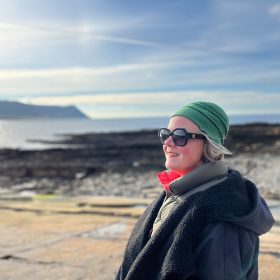
Diana Leslie, born in 1971 in Orkney, is an artist whose practice encompasses painting, printmaking and drawing. After completing her studies at the Glasgow School of Art, she continued to refine her skills at The Prince’s Drawing School in London before returning to her native Orkney in 2006 to establish her studio in Stromness. The landscapes, light and weather of the islands have remained her enduring source of inspiration.
About Bet Low
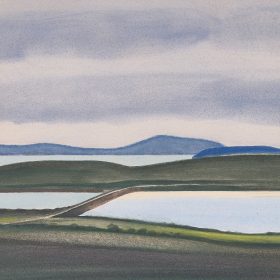
Bet Low was a painter best known for her deceptively simple watercolours of Scottish landscapes. She also produced expressionist drawings of post-war Glasgow, portraits, atmospheric oil paintings and, later, finely detailed and haunting pencil drawings.
About Alex Malcolmson
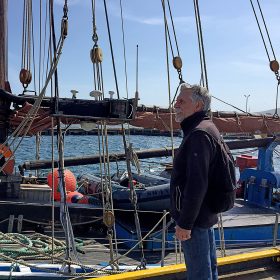
Alex Malcolmson was born in Shetland in 1955 and studied at Edinburgh College of Art. Over the years, he has worked as a teacher, curator, and gallery owner, and now focuses on exhibiting his work across the UK, from Shetland to Cornwall. His box constructions and sculptures are frequently inspired by the Northern Isles, particularly the birds, the sea, and maritime history. Alongside fine art influences, he is drawn to folk art, including ship dioramas and bird decoys, and often uses found materials in his work.
About Richard Rowland
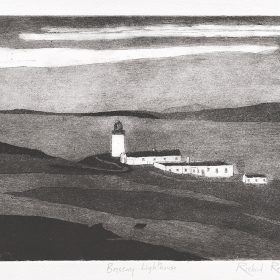
Richard Rowland has worked from his studio on the Westside of Shetland since 1998. He trained in London at the Sir John Cass Art School and the Camden Institute, choosing to specialise in etching in 1986. Since then, he has exhibited regularly in London and Shetland.
About Ron Sandford
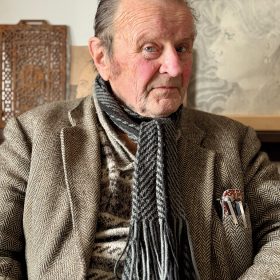
Born in Greenock, Ron Sandford studied at Glasgow School of Art in the late 1950s before continuing at the Royal College of Art, London, specialising in graphics. Renowned for his highly detailed architectural drawings, he worked with leading architects, including Norman Foster, on major commissions such as the Broadgate Centre and Thames Millennium Bridge. His career later took him to Hong Kong before he settled in Yell, Shetland, in 2002.
About Sigurd Smith
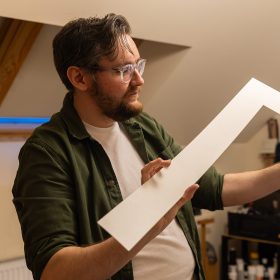
Sigurd Smith is an artist who was born and currently resides in the Orkney Islands. Sigurd graduated from the Orkney College UHI in 2014 with a BA in Fine Arts and Textiles and since then has been involved in various cultural efforts in Orkney, from contributing to the digitisation of the Gunnie Moberg Archive collection to co-founding the Móti Collective with other Orkney-based art graduates.
About Patricia Shone
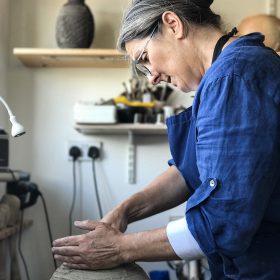
Patricia Shone (b.1962, Greenock) was born in Scotland but grew up in South Devon. After studying ceramics in London, a love of food led her to work as a chef both in London and in Italy, eventually leading her to the Sleat Peninsula on Skye where she returned to potting and where she has remained for over twenty years.
About Frances Walker
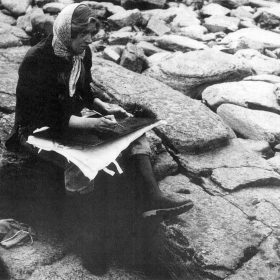
Frances Walker is renowned for her lifelong engagement with remote and elemental landscapes. Born in Kirkcaldy, she studied at Edinburgh College of Art before taking up a post as visiting teacher of art across the Hebrides. Living and working amongst the islands of Harris and North Uist instilled in Walker a profound connection to wild and desolate places, shaping the course of an extraordinary career devoted to the observation of landscape, weather and the passage of time.
About Sylvia Wishart
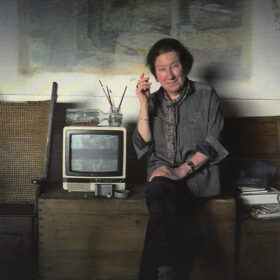
Among the artists who shaped twentieth century Scottish art, Sylvia Wishart holds a distinct and enduring position. Her work is inseparable from the Orkney landscape that defined her life and imagination. At a time when many of her contemporaries sought recognition in mainland Scotland or abroad, Wishart remained rooted in Orkney, painting what she knew with a rare and unhurried intimacy. The result is a body of work that stands quietly apart, meditative, luminous and profoundly local, yet resonant far beyond Orkney’s shores.