Various Artists

A Collector’s Eye

4 May 2023 - 27 May 2023

A Collector’s Eye marks the beginning of a new series accentuating the vital relationship between gallery, artist and collector.

This exhibition brings together two private collections, paintings belonging to the late Professor Donald Eccleston and former director of The Scottish Gallery, David Lockhart. Both collections are a celebration of lives well lived, surrounded by art which gave so much pleasure, each a way-marker in life, of time, place, and people.

About John Gardiner Crawford

John Gardiner Crawford
RSW, RBA, RI
Born: 1941
Place of Birth: Aberdeenshire

There is no shortage of subjects within a few miles of Crawford’s home in Arbroath. He is attracted to the marchlands where sea meets land, where low buildings are scoured by wind and sand, where a lighthouse gives succour to a seafarer’s eye, where the chance order of a row of seagulls or reflection on a cottage window makes us pause, think and wonder. He paints the wilderness of the North Sea, lent significance by the fisherman’s blood that runs in his veins.

Born near Fraserburgh in Aberdeenshire, John Gardiner Crawford attended Gray’s School of Art in Aberdeen (1959-64). Winner of many awards. Shows with us in Scotland, in London and also highly successfully in Canada. Work characterised by an almost supra-realist clarity of detail and light. Subject matter concentrates on the working landscape and paraphenalia of Scotland’s east coast fishing (and farming) communites often inspired by arresting and witty juxtapositions of things seen.

The Scottish Gallery exhibitions: 1982, 1985, 1987, 2003, 2006

About William Crozier

William Crozier was born in 1930 at Yoker, Glasgow, of Irish descent. Between 1949 and 1953 he studied at Glasgow School of Art under David Donaldson, Mary and William Armour. On graduating Crozier left Scotland for London, and spent substantial periods of time between 1955 and 1965 living in Europe, principally in Dublin, Paris and Malaga. He taught at the Central School of Art and later at Winchester, from where he retired as Head of Fine Art in 1987 to paint full-time. Vibrant colour, striking, sophisticatedly-simplified design and an idiosyncratic paint texture characterise his landscape work. Crozier held several one man shows at The Scottish Gallery including the Festival of 1989 where he exhibited paintings, prints, monotypes and bronze sculptures. He also had shows with huge success in Ireland, where he spent part of his time. One major exhibition worthy of note was at the SNGMA in 1995.

HRHA
Born: 1930
Place of Birth: Yoker
Died: 2011
Photograph by courtesy of Estate of William Crozier

About James Cumming

James Cumming
RSA, RSW
Born: 1922
Place of Birth: Dunfermline
Died: 1991

As a painter, James Cumming was possessed of a singular and highly personal vision. Several phases of interest took place in his work, Still Life, Portraits, Space Age, Puppets, Circus and the Electron Microscope brought forth another series of works concerning the visual nature of living cells. The hand of the draughtsman is always very much in evidence, an assured line in absolute control of the formal arrangement.

James Cumming was born in Dunfermline and studied at Edinburgh College of Art. In the early 1950s a travelling scholarship took him for a year to Callanish on the Isle of Lewis leading to his acclaimed series of Hebridean paintings. His considered and meticulously wrought style became concerned with geometry, structure, and abstraction. He also began to lecture on a regular basis at Edinburgh College of Art from 1950. Whilst artist in residence at Hospitalfield in Arbroath in 1960-61, his work and language in abstraction had a significant impact on John Byrne and Alexander Fraser. His most distinctive work of the 1960s is rich in colour, where it is employed, but essentially tonal. His later career was more concerned with natural and cellular forms, vibrant colour and a more prominent geometry.

The Scottish Gallery exhibitions: 1962, 1971, 1972 (Festival), 1985 (Festival), 1995 (Memorial)

About Sir William Gillies

Sir William Gillies
CBE, RSA, RA, PPRSW
Born: 1898
Place of Birth: Haddington
Died: 1973

Sir William Gillies was the dominant figure of the Edinburgh School over which both his personality and his work had a quiet authority. He led by example at the College of Art, encouraging his students to experiment but from a firm grounding in looking, and of course practice, drawing in particular. He also selected his staff to reflect this ethos: men and women who had a similar independence but respected hard work, what William MacTaggart called the good habit. The duties of teaching for Gillies and many of his colleagues in the School of Drawing and Painting were combined with their own practice without conflict; being a professional painter: working and exhibiting, was understood as integral to the reputation and health of the School. Robin Philipson, Elizabeth Blackadder, John Houston, David Michie and James Cumming were the beneficiaries of this attitude, along with their students, quietly instilled by Gillies over his fifty years of influence.

I have been trying to pin down my thoughts on the great man. I do not find it easy. In a way he remains an enigma. I was a student for five years while Gillies was Head of Paintings and yet I had only three or four lessons from him in all that time. The first was when MacTaggart called for Bill Gillies to come and see a painting I had done. He admired it generously and commended it for its tonal values. I had on the easel a much more freely painted thing with apples and a jug. He looked at it and said Apples are not tennis balls. They have planes. He then proceeded to push the wet paint around with his horny thumb, making the apples truly three dimensional, and expressed in planes. On another occasion I was propounding a theory I had come across about Organic Colour Values… I asked him if he did not agree with this. His esponse was typically anti-intellectual. No. Nature always gets the colour wrong, so you have to try to improve it.

David McClure, quoted in W.G. Gillies by W. Gordon Smith, Atelier Books, 1991

The Scottish Gallery exhibitions: 1945, 1949, 1952, 1958 (Festival), 1963 (Festival), 1968, 1971, 1986, 1989, 1991 (Festival), 2011, 2012, 2013, 2016, 2017, 2020, 2023 (Anniversary)


About Earl Haig

Earl Haig
OBE, RSA
Born: 1918
Died: 2009

Dawyck Haig was a distinguished post-war painter, celebrated for a lifetime devoted to painting directly from nature. Working for more than six decades, he developed a highly personal visual language in which observation, memory and abstraction coexist in perfect balance.

Born into the historic Borders family at Bemersyde, Haig’s artistic journey began under extraordinary circumstances. While held as a prisoner of war at Colditz Castle during the Second World War, he discovered painting as both solace and vocation. Following the war, he studied at Camberwell School of Arts and Crafts before embarking on a career that would establish him as one of Scotland’s most respected modern painters.

The landscape around Bemersyde and the River Tweed remained at the heart of his work throughout his life. Woods, riverbanks, gardens, fields and familiar pathways provided an inexhaustible source of inspiration. Although deeply rooted in the Scottish Borders, Haig also found rich subject matter in Venice, the Veneto, the Dolomites, France and South Africa, bringing the same freshness of vision and sensitivity to colour wherever he worked.

Haig painted almost exclusively from direct experience, often working outdoors and returning repeatedly to subjects he knew intimately. Over time, his compositions became increasingly distilled and expressive, reducing landscape to its essential forms while retaining a profound sense of place. As art historian Douglas Hall observed, few artists so completely united “the observation of nature and the creative process of art.”

A longstanding friend of The Scottish Gallery, Haig exhibited regularly with the Gallery throughout his career. His work remains admired for its lyrical colour, structural strength and enduring celebration of the natural world.


About John Houston

John Houston
OBE, RSA, RSW, RGI
Born: 1930
Died: 2008

John Houston (1930–2008) was one of the great painterly forces in modern Scottish art, celebrated for a bold, expressive approach to landscape that combined instinctive draughtsmanship with a profound emotional response to place. Born and brought up in Buckhaven, Fife, Houston’s early life was shaped by the coastal landscape of the East Neuk, where changing weather, estuary light and the rhythms of rural and fishing life formed the foundations of his visual imagination. Horse fairs, football crowds, harbours, fields and shoreline villages would continue to surface throughout his career, transformed through paint into works of immense vitality and atmosphere.

Houston studied at Edinburgh College of Art in the late 1940s under Sir William Gillies, whose influence remained significant throughout his life. Like Gillies, Houston possessed an extraordinary natural fluency with paint and a deep commitment to working directly from observation. Yet while rooted in the traditions of the Edinburgh School, Houston pushed beyond its restraint towards a more vigorous and expressionistic handling of colour and surface. Paint became the means through which weather, movement and sensation could be experienced rather than merely described.

Travel played an important role in Houston’s practice. Alongside his wife and fellow artist Elizabeth Blackadder, he travelled widely throughout Europe, Japan and the United States, producing ambitious exhibitions inspired by each journey. Whether painting the harbours of France, Venetian canals, Japanese gardens or the coastline of East Lothian, Houston approached every subject with the same urgency, confidence and painterly freedom. His landscapes are alive with shifting light and movement, built through richly worked surfaces and dynamic brushwork that reveal the physical act of painting itself.

Still life and figure painting also formed an important part of his oeuvre, but it was landscape that remained at the emotional centre of his work. The Bass Rock, East Lothian coastline, the Lammermuir Hills and the beaches of Fife became recurring motifs, revisited repeatedly across decades with endless variation and invention. His paintings celebrate not simply the appearance of place but the experience of standing within it: the force of wind, the movement of clouds, the density of air and the fleeting drama of Scottish weather.

The Scottish Gallery played a central and enduring role throughout Houston’s career. Represented by The Gallery from the late 1950s, he developed a particularly close relationship with Guy Peploe, rooted not only in mutual respect but also in Houston’s long friendship with Guy’s father, the artist Denis Peploe. This loyalty and shared understanding between artist and gallery endured for over five decades and resulted in one of the most significant exhibiting relationships in modern Scottish art.

Houston became one of The Scottish Gallery’s defining Festival artists, presenting ten major solo exhibitions during the Edinburgh International Festival between 1961 and 2008. These exhibitions cemented his reputation as one of Scotland’s foremost painters and established The Scottish Gallery as the principal home for his work. Following his death in 2008, The Gallery continued to champion his legacy through memorial and retrospective exhibitions, reaffirming his importance within twentieth-century British painting.

Selected exhibitions with The Scottish Gallery include 1960, 1962 Festival Exhibition, 1965, 1967 Festival Exhibition, 1971 Festival Exhibition, 1975, 1980, 1990, 1993, 1997, 2003 Festival Exhibition, 2007 Festival Exhibition, John Houston Memorial Exhibition in 2009, and further exhibitions celebrating his work in 2012 and 2013.

In 2005 Houston was honoured with a major retrospective at the Scottish National Gallery of Modern Art, recognising a lifetime devoted to painting and his position as one of Scotland’s most important modern artists. His work is held in numerous public collections including the National Galleries of Scotland, Tate and the Royal Scottish Academy.

The Scottish Gallery continues to actively seek important works by John Houston.

Click here to view prints by this artist.
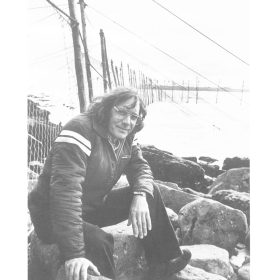
About George Leslie Hunter

George Leslie Hunter
Born: 1877
Place of Birth: Rothesay
Died: 1931

Born in Rothesay in 1877, George Leslie Hunter emigrated to California in 1892 where his father bought a farm. He spent all his time drawing and when his family came back to Scotland in 1900 he remained in California and became part of the Bohemian lifestyle of San Francisco. He earned money by acquiring illustration work for newspapers and magazines. He went to New York with friends and then on to Paris in 1904, working in each city for a few months.

Back in San Francisco he lost everything in the 1906 earthquake and shortly thereafter returned to Scotland. He had his first solo exhibition with Alexander Reid in Glasgow in 1915, an association which continued until his death in 1931.  From 1923 he exhibited with Peploe and Cadell as the Three Scottish Colourists, and spent much of the twenties in France, often subsidised by Reid and a coterie of dedicated collectors, including T.J. Honeyman who wrote his biography after his untimely death at the age of fifty-four.

Leslie Hunter, as I review the good old days, seems to be all-pervasive. I knew him first in San Francisco, and we lived the carefree Bohemian life and were unaware of it. I moved to New York; and he came down Broadway as accustomed as a piece of scenery. Paris – and there was Hunter sketching on a street corner. London – and Hunter hailed me from the next table of a Chelsea restaurant. Glasgow – and Hunter, finding my name at a hotel in an obscure newspaper paragraph, called me up on the telephone. I have no doubt that if I ever visit Damascus I shall find him there ahead of me. And always the same Hunter; Scotch from his accent to his walk, quietly friendly, quaintly witty. I had laughed with him many times over these recurrent meetings of ours before I realised how much the boy I knew and starved with in San Francisco was coming to mean in modern art. When in the first decade of this century painting shook off the Victorian shackles, he found himself. Reid, the famous Glasgow dealer, a leader in the Modernist movement, ‘brought him out’. Reid it was who introduced Degas, Manet and Renoir to Great Britain. Tradition says that he was one of the few men whom the crusty Degas would admit to his Studio. He sold most of Whistler’s paintings. And Reid’s verdict that Hunter is ‘a more powerful Colourist than Matisse and equally refined’ carries authenticity. Hunter belongs to that school which Paris calls les écossais modernes. This group of late has given exhibitions at the Leicester Galleries in London and the select Barbazanges Gallery in Paris: in both instances the force and purity of their colour attracted sensational attention. Fergusson and Peploe of this modern group have already exhibited in New York; but although Hunter grew up in California this is his first appearance in an American gallery. He lives and paints, now, on the Côte d’Azur; and that richly coloured country is the inspiration for most of these landscapes. – Will Irwin, 1929 (reviewing Hunter’s exhibition at the Ferargil Gallery, New York)

G.L. Hunter & The Scottish Gallery 

In April 1924, Alexander Reid and The Scottish Gallery signed a joint contract with G.L. Hunter and his first solo exhibition at The Scottish Gallery was held in the autumn. This was a momentous year for The Colourists which saw the exhibition Les Peintres de l’Écosse Moderne at the Galerie Barbazanges in Paris, featuring Peploe, Fergusson, Hunter and Cadell. It was also a productive time for Hunter, who worked in Fife, on Loch Lomond and in a Glasgow studio for most of the next three years. From 1928, Hunter was living mostly in the South of France, based in Saint[1]Paul-de-Vence, but he continued to send work back to The Gallery.


About John Maclauchlan Milne

John Maclauchlan Milne
RSA
Born: 1885
Place of Birth: Edinburgh
Died: 1957

Milne is often referred to as the fifth Scottish Colourist, and indeed his work and life have strong connections to his better-known contemporaries. It is his French paintings, however, that most clearly reveal the artistic affinities he shared with Peploe, Hunter and Cadell.

He married Winifred Milne (née Clark), the daughter of a Dundee greengrocer, in Edinburgh in July 1911. Following their divorce in July 1946, he married Elsie Mackellar, the daughter of a music teacher from Paisley, the following month. The couple had met on Arran, at Corrie, around 1939 – 40. Milne spent time living at Lavardin in the Loir-et-Cher region, one of France’s most beautiful villages, and travelled extensively in France throughout the 1920s. His Paris scenes, together with paintings made at Saint-Tropez and nearby Ramatuelle on the Côte d’Azur in 1924, rank among his finest achievements. Like Fergusson, he enjoyed a long and productive career, and his many paintings of the hills and harbours of Arran, where he settled at the outset of the Second World War, remain a distinctive and important part of his artistic legacy.

About Sir William MacTaggart

Sir William MacTaggart
PPRSA, RA, RSW
Born: 1903
Place of Birth: Loanhead
Died: 1981

Born in Loanhead, near Edinburgh, Sir William MacTaggart was the grandson of the landscape painter William McTaggart (1835–1910). He studied at Edinburgh College of Art from 1918 to 1921, at the same time as William Gillies, and travelled to Paris after graduating. He was a founder member of the 1922 Group and in 1927, he joined the exclusive Society of Eight whose members included Colourists F.C.B. Cadell and S.J. Peploe and began, ahead of his contemporaries a successful exhibition career at The Scottish Gallery from 1929.

A sumptuous painter in oils, he was instinctively an expressionist and romantic painter. His outlook shifted dramatically after visiting the Edvard Munch exhibition at the Scottish Society of Artists in 1931 (he eventually married the Norwegian curator, Fanny Aavatsmark) and again after studying Rouault in Paris in the 1950s. From his home and studio in Edinburgh’s Drummond Place in the New Town, some of his best-known works offer a still life, framed by a window, looking east towards Bellevue Church. MacTaggart was president of the RSA from 1959–1969 and was knighted for his services to art in 1962. From 1951, MacTaggart and his wife travelled the short distance to the Johnstounburn Hotel at Humbie for the Christmas Holidays. East Lothian and the Borders became a favourite landscape and the inspiration for some of his most engaging work.

The Scottish Gallery exhibitions: 1929, 1953, 1959 (Festival), 1966 (Festival)

About James Morrison

James Morrison
RSA, RSW
Born: 1932
Place of Birth: Glasgow
Died: 2020

Born in Glasgow in 1932, James Morrison was one of the most significant Scottish landscape painters of the post-war period. He studied at Glasgow School of Art from 1950–54, developing the rigorous observational practice and draughtsmanship that would underpin a career spanning more than six decades. While his early paintings focused on the streets and tenements of Glasgow, his move to Catterline in 1958 marked a decisive shift towards landscape and established many of the themes that would define his mature work.

From the northeast coast and the farmland of the Mearns to the tidal landscapes of Montrose Basin and the remote expanses of Assynt, Morrison developed a highly distinctive vision of the Scottish landscape. Working predominantly en plein air, he painted directly before his subject, responding to shifting weather, changing light and the structure of the land itself. His paintings are characterised by expansive skies, measured horizons and an acute sensitivity to atmosphere, balancing direct observation with a profound understanding of space and composition.

In 1965 Morrison settled in Montrose and joined the staff of Duncan of Jordanstone College of Art in Dundee, where he later became Senior Lecturer. Alongside teaching, he continued to develop a remarkable body of work rooted in Angus and the northeast coast. The landscapes around Montrose, Farnell, Kinnell and Montreathmont became enduring subjects, allowing him to refine the visual language for which he became internationally recognised.

From the 1970s onwards, Morrison expanded his practice through regular painting trips to the west coast of Scotland, particularly Assynt and Achiltibuie, where the clarity of the atmosphere and dramatic geological forms provided new stimulus. He also travelled extensively abroad, painting in France, Greece, Botswana, Switzerland and the Canadian Arctic. Between 1990 and 1996 he undertook four expeditions to the High Arctic, producing some of the most ambitious and contemplative works of his career. These paintings, with their vast spaces, restrained palettes and elemental stillness, represent a major achievement within contemporary Scottish painting.

Morrison’s relationship with The Scottish Gallery spanned more than sixty years and formed one of the most significant artist-gallery partnerships in Scottish art. He first exhibited with The Gallery in 1959, when Aitken Dott & Son presented his debut solo exhibition in Edinburgh, introducing his paintings of Glasgow and the northeast coast to a wider audience. Over the following decades, The Scottish Gallery presented more than twenty-five solo exhibitions of his work, charting the evolution of his practice from the structural landscapes of Catterline and Angus to the monumental panoramas of Assynt and the Arctic.

From the late 1980s onwards, Morrison worked exclusively with The Scottish Gallery. This long association enabled the Gallery to present major Festival exhibitions, touring exhibitions and retrospectives that introduced successive generations of collectors and audiences to his work. The relationship was founded on a shared commitment to Scottish painting and to the sustained development of an artist’s career over a lifetime of practice.

In June 2022, The Scottish Gallery presented James Morrison: A Celebration 1932–2020, a major retrospective exhibition spanning seven decades of painting and drawing. More recently, James Morrison: Under a Northern Sky, published by The Scottish Gallery Press, further explored the breadth of his achievement, tracing his artistic journey from Glasgow and Catterline to the landscapes of Angus, Assynt and the High Arctic. The publication is available to purchase through The Scottish Gallery.

James Morrison died in 2020. His work is held in major public collections including the National Galleries of Scotland, The McManus, Glasgow Museums, the Royal Scottish Academy, Aberdeen Art Gallery and numerous university and civic collections across the UK. Widely regarded as one of the defining painters of the Scottish landscape tradition, Morrison’s work remains celebrated for its clarity, restraint and enduring sense of place.

About Alberto Morrocco

Alberto Morrocco
RSA, RSW
Born: 1917
Place of Birth: Aberdeen
Died: 1998

Alberto Morrocco OBE, was one of the most charismatic and influential figures in Scottish art during the second half of the twentieth century. Born in Aberdeen to Italian parents, he studied at Gray’s School of Art from the age of fourteen under James Cowie and Robert Sivell, winning both the Carnegie and Brough Travelling Scholarships which enabled him to study and travel in France, Switzerland and later Italy.

Morrocco’s Scottish upbringing and Italian heritage combined to create a unique artistic vision. While his rigorous training instilled a lifelong commitment to drawing, structure and composition, his imagination was fuelled by the colour, warmth and theatricality of Mediterranean life. Throughout his career he returned repeatedly to subjects that became synonymous with his work: bustling Italian beaches, melon sellers, still lifes, domestic interiors, musicians, harlequins and portraits, all rendered with extraordinary vitality and sensual colour.

Following military service during the Second World War, Morrocco completed his travelling scholarship and in 1950 was appointed Head of Painting at Duncan of Jordanstone College of Art in Dundee, a position he held for over thirty years. There he influenced generations of artists while establishing himself as one of Scotland’s most admired painters.

Although renowned as a master draughtsman and colourist throughout his life, the final fifteen years of his career saw an extraordinary creative flowering. Freed from academic responsibilities, he painted with increasing spontaneity and brilliance, producing works of remarkable confidence, exuberance and joie de vivre. As his friend David McClure observed, “Alberto painted as an Italian operatic tenor sings, that is with a passionate theatricality and always con brio.”

A longstanding artist of The Scottish Gallery, Morrocco first exhibited with the Gallery in 1957 and remained one of its most celebrated painters throughout his career. His work is held in major public collections across the United Kingdom, including the National Galleries of Scotland, Dundee Art Galleries and Museums, Aberdeen Art Gallery and the Royal Scottish Academy.

The Scottish Gallery celebrated the centenary of Morrocco’s birth with a major exhibition in 2017.

About David McClure

David McClure
RSA, RSW
Born: 1926
Place of Birth: Lochwinnoch
Died: 1998

David McClure was one of the outstanding Scottish painters of the post-war generation. He emerged from Edinburgh College of Art in the early 1950s alongside a remarkable group of artists including James Cumming, William Baillie, John Houston, Elizabeth Blackadder and David Michie. Together, they helped shape what became known as the Edinburgh School: a generation defined by strong draughtsmanship, expressive colour and a renewed confidence in painting.

McClure’s early career developed within an exceptionally rich artistic climate. Edinburgh was home to influential teachers and exhibiting societies, while The Scottish Gallery was presenting the work of established figures such as Anne Redpath, William Gillies and William MacTaggart, alongside younger artists including Joan Eardley and Robin Philipson. McClure soon joined this company, holding his first solo exhibition with The Scottish Gallery in 1957.

Travel played a vital role in the formation of his mature style. Following a year spent painting in Florence and Sicily, McClure absorbed the colour, light and structure of Mediterranean painting, qualities that remained central to his work. By the late 1950s he was teaching at Duncan of Jordanstone College of Art in Dundee alongside his close friend Alberto Morrocco, contributing to the college’s reputation as one of Scotland’s great centres of painting.

Throughout the 1960s McClure was included in important surveys of contemporary Scottish art, helping to define the character and ambition of the Edinburgh School. His 1969 Edinburgh Festival exhibition at The Scottish Gallery marked a high point in his relationship with the Gallery and confirmed his position as one of the leading painters of his generation.

McClure’s work is distinguished by its luminous colour, patterned surfaces and intimate subject matter. Still lifes, interiors, landscapes and family scenes are transformed through a rich painterly language that balances observation with imagination. His paintings remain deeply admired for their warmth, intelligence and unmistakable sense of joy in the act of painting.

The Scottish Gallery exhibitions: 1957, 1962, 1966, 1969 Festival Exhibition, 1989, 1992, 1994, 1996 70th Birthday Exhibition, 2000 Memorial Exhibition, 2003, 2010, 2014, 2015, 2019, 2022.

About Lilian Neilson

Lilian Neilson
Born: 1938
Place of Birth: Kirkcaldy
Died: 1998

Born in Kirkcaldy in 1938, Lilian Neilson was a painter and printmaker whose work was shaped profoundly by the elemental coastline and weather of northeast Scotland. She studied at Duncan of Jordanstone College of Art in Dundee from 1955–1960, where she developed a rigorous approach to drawing and painting before undertaking a post-diploma year under Hugh Crawford and Alberto Morrocco in 1960–61. Awarded a travelling scholarship to France and Italy in 1961–62, Neilson absorbed the influence of European modernism while refining a deeply personal visual language rooted in direct observation and emotional response to place.

Following her return from Europe, Neilson spent increasing periods in the fishing village of Catterline, where she formed a close friendship with Joan Eardley. The dramatic cliffs, turbulent seas and shifting weather systems of the northeast coast became central to her practice. Like Eardley before her, Neilson responded to Catterline not simply as landscape, but as a place of physical and emotional intensity. Her paintings capture the force and movement of the natural world through richly worked surfaces, energetic mark-making and a powerful sense of atmosphere. Wind, tide, rain and erosion became recurring themes within a body of work that feels both deeply rooted in observation and highly expressive.

Alongside painting, Neilson worked backstage in theatre with Reet Guenigault, contributing to productions at venues including the Traverse Theatre in Edinburgh. Yet it was Catterline that remained the emotional centre of her life and work. Following Joan Eardley’s illness in 1962, Neilson returned to help care for her friend during the final stages of her life. Soon afterwards she purchased No. 2 South Side, one of the tiny fishermen’s cottages in the village, creating a home and studio that allowed her to work directly within the landscape that inspired her most profoundly.

Neilson lived quietly and with remarkable dedication to her practice, embracing the rhythms and hardships of life on the coast. In 1986 she moved permanently to Catterline, where she began an extraordinary sustained engagement with the surrounding environment. Undertaking regular monthly surveys of the coastline and beaches, she documented seasonal change, erosion, weather and light with remarkable sensitivity and persistence. During this period she also returned to Dundee to study printmaking, extending her exploration of landscape through etching and graphic processes that echoed the structural intensity of her paintings.

Her later works possess a meditative quality, balancing the raw energy of the coast with moments of stillness and reflection. Whether depicting storm-darkened cliffs, winter shorelines or the muted colours of tidal pools and seaweed-covered rocks, Neilson painted with a profound understanding of the physical and emotional character of place. Her work stands within the lineage of great Scottish landscape painting while retaining a singular voice marked by honesty, restraint and emotional depth.

Neilson’s final exhibition, Certain Days and Other Seasons, was presented at the Seagate in Dundee and Aberdeen Art Gallery shortly before her death in 1998. Today her work is increasingly recognised as an important contribution to post-war Scottish painting, closely connected to the legacy of Catterline while remaining wholly individual in vision and achievement.

About Ann Oram

Ann Oram
RSW
Born: 1956
Place of Birth: London

Ann Oram was born in London in 1956 she trained at Edinburgh College of Art. After her post-graduate year and Andrew Grant Scholarship to France and Italy, Ann returned to ECA to lecture in the Painting school.

Ann has spent many years living and working abroad and the inspiration she gets from her travels helps to keep her work fresh and vibrant. During the 1980s, as well as being elected to RSW (Royal Scottish Society of Painters in Watercolour) she spent many years living in southern Spain. More recently, Ann has returned from a long spell in Vienna, Austria. The Austrian adventure also allowed her to work in Switzerland, the Czech Republic, Italy and Hungary. She now paints full time in Scotland.

About Denis Peploe

Denis Peploe
RSA
Born: 1914
Died: 1993

Denis Peploe RSA (1914–1993) was born in Edinburgh, the second son of the Scottish Colourist S. J. Peploe. Growing up within one of Scotland’s most distinguished artistic families, he accompanied his father on painting trips to Iona and the south of France, yet from an early stage developed an independent artistic identity and remained wary of direct comparison with his celebrated parent.

At seventeen he enrolled at Edinburgh College of Art, where contemporaries included Wilhelmina Barns-Graham and Margaret Mellis. His talent was quickly recognised through scholarships to Paris and Florence, followed by extensive travels in Spain, Italy and Yugoslavia. Exposure to European modernism informed his early work, but his career was interrupted by six years of military service during the Second World War, during which he rose from enlisted soldier to Captain in the Special Operations Executive.

Returning to painting in 1946, Peploe sought inspiration in the dramatic landscapes of the West Highlands. The mountains and sea lochs around Plockton, Applecross and Torridon became enduring subjects, painted with an expressive intensity that distinguished his work from the more decorative traditions associated with the Scottish Colourists. His first exhibition at The Scottish Gallery in 1947 was met with remarkable critical acclaim, prompting one reviewer to describe him as “an artist born fully armed” and another as “a vital and adventurous painter.”

Throughout his career Peploe remained committed to direct observation, whether painting Highland landscapes, Mediterranean harbours, still life or the human figure. Travel to Cyprus, Spain and France enriched his palette and broadened his vision, while his teaching at Fettes College and later Edinburgh College of Art provided a stable framework for a deeply personal studio practice.

His son, Guy Peploe, explains:

“While he was intimately exposed to the mainstream of European art he remained better defined as an artist who responded directly to his subject, en plein air or in the studio. Here the challenge was a live model, or the intellectual exercise of reinvigorating the still life subject. His work remained free of political or art-world references but was at the same time formed by the century of modernism, the times of unprecedented turmoil and change to which he belonged. His response was to cleave to the idea that art was important, even redemptive and that it could somehow describe a better, or more vital place.”

A longstanding artist of The Scottish Gallery, Denis Peploe first exhibited with the Gallery in 1947 and remained an important presence throughout his career. Today his work is recognised for its painterly vigour, emotional honesty and singular contribution to twentieth-century Scottish art.

The Scottish Gallery exhibitions: 1947, 1948, 1951, 1954, 1984, 1988, 1990, 1995 (Memorial Exhibition), 2006, 2010, 2014 (Centenary Exhibition).

About Sir Robin Philipson

Sir Robin Philipson
PPRSA, RA
Born: 1916
Place of Birth: Broughton-in-Furness
Died: 1992

Sir Robin Philipson had a significant, influential presence on the Scottish Art Scene throughout his lifetime. He served as Head of School of Drawing and Painting at Edinburgh College of Art where he diligently maintained the ideals of the post-war Edinburgh School. And, for a whole decade he was President of the Royal Scottish Academy – a period seen as a Golden Age in Scottish Painting. First and foremost, however, he was a practicing painter.

In 1961 Tom Elder Dickinson described Robin Philipson as ‘…original without being pretentious, forceful without being crass, advanced without being outré. . . At his best he is a supreme painter possessed by a mood of peculiar sensitiveness. I can think of no artist today whose understanding and feeling for the qualities of paint are so perfectly matched to his lyrical purpose; he takes the paint into his very imagination and makes it speak with (an) eloquence and fervour.’

Philipson was enormously important to The Scottish Gallery where we held nine exhibitions in his lifetime. He was doubtless the most high-profile Scottish artist of his generation earning countless honours including a knighthood in 1976.

The Scottish Gallery exhibitions: 1954, 1958, 1961 (Festival), 1965 (Festival), 1968, 1970 (Festival), 1973, 1976 (Festival), 1983 (Festival) 1995 (Memorial), 2003, 2006, 2012, 2016 (Centenary)

His art, its free handling, its meaningful decorative values and its sometimes dark subjects, it remains a serious investigation of life. For him the production of art was essential but brave.

Elizabeth Cumming, 2018


About Anne Redpath

Anne Redpath
OBE, RSA, ARA, RWA
Born: 1895
Died: 1965

Born in Galashiels in 1895, Anne Redpath was one of the defining figures of twentieth-century Scottish painting and a central force within what became known as the Edinburgh School. A painter of remarkable individuality, confidence and technical brilliance, Redpath transformed still life, landscape and interior painting through her bold handling of colour, richly textured surfaces and instinctive understanding of composition. Her work combined the decorative refinement of European modernism with a profoundly personal response to the domestic world, establishing a visual language that remains among the most distinctive in British painting.

Redpath studied at Edinburgh College of Art from 1913, where her exceptional talent quickly became apparent. In 1919 she was awarded a prestigious travelling scholarship, allowing her to study in Bruges, Paris, Florence and Siena. The experience proved transformative. Renaissance painting, church interiors and the colour and structure of European art remained lifelong influences, although Redpath absorbed these sources into an unmistakably independent vision. As Patrick Bourne observed, even her early copies after Botticelli reveal a painter already interpreting rather than imitating.

Following her marriage to architect James Michie in 1920, she lived in France for over a decade, first in St Omer and later on the Côte d’Azur at Cap d’Ail and St Raphaël. The Mediterranean light, architecture and atmosphere broadened her palette and introduced a new freedom into her work. During this period she held an exhibition at the Casino in St Raphaël in 1928, while continuing to send paintings back to Scotland for exhibition.

Returning permanently to Scotland in 1934, Redpath devoted herself fully to painting while raising her three sons. The following decades saw an extraordinary flowering of her career. Initially inspired by the Borders landscape and domestic interiors, she soon developed the richly orchestrated still life and interiors that would become central to her reputation. Paintings such as The Indian Rug demonstrated her extraordinary command of colour, structure and surface, while revealing the influence of Matisse filtered through a distinctly Scottish sensibility. Her vigorous use of brush, knife and rag gave her paintings a tactile vitality that became one of the defining characteristics of her mature work.

Travel remained fundamental to Redpath’s imagination. From the 1940s onwards she painted in Skye, Spain, Brittany, Corsica, Portugal, the Canary Islands and Venice, constantly renewing her visual vocabulary through direct engagement with new landscapes and cultures. Church interiors, hillside villages, harbours and flowers all became subjects through which she explored colour, rhythm and structure. Even in her later works, where the palette often became darker and more restrained, flashes of jewel-like colour animate the compositions with extraordinary intensity.

Anne Redpath enjoyed a long and highly significant relationship with The Scottish Gallery, which became central to her exhibiting career in Scotland. Her first solo exhibition with The Scottish Gallery was held in 1950, beginning a fruitful partnership with Mrs Proudfoot and later Bill Macaulay. Further solo exhibitions followed in 1953, 1957, 1960 and 1963, with a Memorial Exhibition held in 1965 shortly after her death. The Gallery has continued to champion her work through major posthumous exhibitions including Anne Redpath Centenary Exhibition in 1995, Anne Redpath: Oils and Works on Paper in 2003, The Michie Family in 2012 and Anne Redpath: Fifty in 2015, marking fifty years since the artist’s death.

Alongside her exhibiting success in Edinburgh, Redpath established an important reputation in London through Reid & Lefevre Gallery and regular exhibitions at the Royal Academy. She became the first female painter elected as a full Academician of the Royal Scottish Academy in 1952 and in 1960 became the first woman painter since the war to be elected an Associate of the Royal Academy in London. She was awarded an OBE in 1955 in recognition of her contribution to art. Her London Street flat in Edinburgh became an important artistic meeting place, frequented by painters, writers and musicians, and immortalised in Sir Robin Philipson’s celebrated group portrait now in the Scottish National Portrait Gallery.

Today Anne Redpath is recognised as one of the great innovators of modern Scottish painting. Her work is held in major public collections including the National Galleries of Scotland, Tate, Aberdeen Art Gallery and numerous civic and university collections across the UK. Her paintings remain remarkable for their vitality, elegance and emotional resonance, balancing formal sophistication with an intense delight in paint itself. Few artists have contributed more profoundly to the development of Scottish painting in the twentieth century.

About Duncan Shanks

Duncan Shanks
RSA, RSW, RGI
Born: 1937
Place of Birth: Airdrie

Duncan Shanks was born in Airdrie in 1937 and studied at Glasgow School of Art from 1955–1960, later receiving a travelling scholarship which allowed him to visit Italy during his Post Diploma year. Returning to Glasgow, he joined the staff at the School of Art, where he lectured until 1979 before dedicating himself fully to painting.

For more than six decades, Shanks has developed a deeply personal and immersive visual language rooted in the landscape surrounding his home in Crossford, in the Clyde Valley. Working from direct observation, his practice begins outdoors with walking, drawing and recording fleeting moments in nature before these impressions are transformed in the studio into richly layered and expressive paintings. Rivers, wooded glens, storms, hedgerows, moonlight and shifting weather become catalysts for works that balance abstraction and representation with extraordinary energy and sensitivity. Shanks has often described painting as “a journey through a landscape of self”, where memory, movement, poetry and music merge with the experience of the natural world.

The Falls of Clyde, Tinto Hill and the surrounding valley have remained enduring subjects throughout his career. His paintings capture the force and rhythm of nature through sweeping gesture, intricate mark-making and luminous colour, creating works that feel both elemental and intensely lyrical. Whether describing cascading water, storm clouds gathering over hills, or the tangled vitality of winter hedgerows, Shanks conveys landscape as something alive, constantly changing and emotionally charged.

Shanks has exhibited internationally and has been the subject of major public exhibitions including Falling Water at Talbot Rice Gallery, Edinburgh (1988), Patterns of Flight at Wrexham Art Centre (1991), and Poetry of Place at the Hunterian Art Gallery, Glasgow (2013), which coincided with the bequest of his complete sketchbook archive to the Hunterian collection. His work is held in numerous public and private collections across the UK. In December 2026, Duncan Shanks’ work will again be celebrated in a major presentation at the Hunterian Art Gallery, alongside a significant new solo exhibition at The Scottish Gallery.

About Adam Bruce Thomson

Adam Bruce Thomson
OBE, RSA, PPRSW
Born: 1885
Died: 1976

Bruce Thomson – or ‘Adam B’, as he was often called – was a painter of great integrity whose long, productive life tells the story of Scottish painting for the first three quarters the twentieth century. Thomson was born in 1885, attending first the Trustees Academy and then the newly established Edinburgh College of Art where he received diplomas in both Drawing and Painting, and Architecture before scholarships took him abroad to Spain and then Paris.

He was an accomplished etcher and lithographer and he also sought expertise in the difficult media of pastel and watercolour. By the 1920s, his technique was closest to S.J. Peploe, Cadell and other contemporaries favouring the technique of painting on a gesso ground with an oil-reduced vehicle so the subjects tended to be treated in flat areas of colour.

Thomson served in the Great War before returning to the College where he taught etching, composition and still life to the painting school and colour theory to the architecture students. His association with Edinburgh College of Art continued until his death as, although he retired from teaching in 1950, he continued as an examiner and a Trustee. His links with both the RSA, where he was Treasurer for seven years and the RSW, where he served as President for a further seven years from 1957 were very important to him. He was awarded an OBE in 1963. In 2024 the City Art Centre in Edinburgh held a major retrospective of his work, The Quiet Path, his first major exhibition in a public institution.

About Christopher Wood

Christopher trained at Edinburgh College of Art, graduating with an Honours degree in Drawing & Painting in 1984. He has been a full-time professional artist since his first one-man exhibition in Edinburgh 1987. He is  a Past-President of the Society of Scottish Artists, an elected member of the Royal Scottish Society of Painters in Watercolour and an elected member of the Royal Glasgow Institute of the Fine Arts.

PPSSA, RSW, RGI
Born: 1962
Place of Birth: Dunbar

About Nael Hanna

I am inspired by water, sound and nature, being fascinated by the changing colours and shapes reflected in the sea, land and sky. I enjoy looking for the rhythms created in nature and hope to capture the force of the natural elements which dictate so much to the world that we live in. I spend a great deal of time observing the coastal landscape near my Angus home, and however much at times I feel that I should escape from this recurring subject, I am always willingly drawn back by its sheer beauty and magnetism.

Nael Hanna

Nael Hanna was born in 1959 in Neneveh, Northern Iraq. At 19, Hanna entered further education before being drafted into the Army to serve during the Iraq-Iran War. Whilst in military service, he continued to paint and was awarded a scholarship by the Ministry of Education, Baghdad, which
took his studies to Britain. In 1983, he undertook art and language courses in Southampton before being awarded a scholarship to study Fine Art at Duncan of Jordanstone College of Art, Dundee.

In 1987, Hanna won a further scholarship to study at Hospitalfield Summer School, Arbroath, where he developed an enduring passion for the northeast of Scotland, particularly Angus and the Kincardineshire coastline. After graduating, he travelled to Florence to study before returning to the rural Angus countryside where he made his home and studio. He has also been a lecturer at Duncan of Jordanstone College of Art. Today, Hanna paints full-time and is inspired by a deep love of nature and the wild Scottish landscape.

Born: 1959
Place of Birth: Neneveh

About Caroline Hunter

The soaring skies, building seas, bleached grasses against leaden hills, rusting tin roofs, brilliant greens of early summer and the roaring luminous surf at dusk in winter never lose their power and keep me reaching for my brushes.

Caroline was born in Edinburgh in 1964, the family then moving to the Orkney Isles in 1968 where her mother taught Latin and her father built boats. After gaining an Honours Degree in History of Art at Aberdeen University (1982 – 6) Caroline moved to Edinburgh and worked as an archaeological fieldworker in North Uist, Iona and Shetland and as a conservation volunteer.

Returning to Orkney, Caroline began painting in 1994. Although she had no formal training in painting beyond school art classes, her paintings soon began to sell. After relocating to the Scottish Borders Caroline had her first solo show at the Mainhill Gallery in Ancrum in 1997. The very same year Caroline also had her first painting, Donald’s Bible accepted into the RSA.

During these formative years Caroline was prolific, working in acrylics on large pieces, there was an out-pouring of imagery: principally elaborate, chintzy, almost glowing still-lifes, the Belted Galloway cattle on the Eildon Hills where she lived and more sombre land and sea scapes, redolent of her childhood in the Orkneys.

The millennium saw Caroline moving to Argyll where she married and had two sons: the eldest Donald was born 5 days before the opening of her solo show: “Under Western Skies” with John Martin of London in Mayfair in 2004.

Now working in oils, Caroline continues to paint & exhibit full-time, with work in Edinburgh (The Open -Eye) , Glasgow (The Billcliffe Gallery) and various west coast galleries.

In endless pursuit of conveying the subtle vibrancy of the Atlantic fringe where she walks and kayaks, occasional forays into figure-painting and always the chintzy still-lifes, her work continues to develop and endure.


.

Born: 1964
Place of Birth: Edinburgh

About Florence Jamieson

Florence Jamieson
RSW
Born: 1925
Died: 2019

Jamieson’s distinctive paintings and drawings reflect a love of nature and close observation, finding inspiration in the things she saw around her, painting still lifes, landscapes and natural objects such as shells, wood and stones using mixed media.

Florence Jamieson is considered one of the Glasgow Girls. Born in Glasgow in 1925 to a medical family with farming roots, she was evacuated to Morar in Lochaber during WWII where she attended high school for a few years before becoming head girl of St Trinnean’s in Galashiels. She began attending evening classes at the Glasgow School of Art. She met and married the artist Robert Sinclair Thomson, ARSA (1915–1983) and they set up a commercial pottery studio in their Glasgow home; the first of its kind in Scotland and now referred to as the Clouston Street Pottery. In the 1950s Florence built a successful exhibiting career, with solo exhibitions at The Scottish Gallery in 1958 and 1961. Working in Glasgow, she was a friend and contemporary to Joan Eardley and Margot Sandeman. In 2014, she was one of four remaining living artists represented in the Glasgow Girls Kirkcudbright exhibition. Her work is represented in various public collections including Kelvingrove Art Gallery & Museum, the Hunterian Art Gallery, The Scottish Arts Council Collection, Gracefield Arts Centre in Dumfries, and the Scottish Fisheries Museum in Anstruther.

Photograph by courtesy of the artist’s family

About Sheila MacMillan

Sheila MacMillan
Born: 1928
Died: 2018

Her training as a geographer, allowed her to use her understanding of land formation, the delicate balance of the seasons and explore the interaction between Man and the environment.

Sheila Macnab Macmillan was born in Glasgow in 1928. She attained a degree in Geography at Glasgow University and went on to train as a teacher. Her painting talent was encouraged by her artist uncle Iain Macnab RE ROI (1890–1967) who persuaded Sheila to come to London and train under him. Iain Macnab had been Principal at Heatherley’s Art School (1925–1940) and became the founding Principal of the Grosvenor School of Modern Art. Sheila’s London influences and Glasgow School foundations evolved into a distinctive and individual style. She usually worked en plein air and her work is semi abstract.

About John Piper

John Piper
Born: 1903
Died: 1992

John Piper was born in 1903 in Epsom Surrey and was an English painter, printmaker and designer. He is regarded as one of the early neo-romantic painters and a popular post-war artist. His practice encompassed the British landscape, especially churches and monuments. He lived at Fawley Bottom in Buckinghamshire near Henley-on-Thames. He was educated at Richmond School of Art and the Royal College of Art, London. Piper was an official war artist in World War II between 1940–1942, and his wartime depictions of bomb-damaged churches and landmarks, most notably those of Coventry Cathedral, made him a household name and led to his work being acquired by many public collections.

About Annette Stephen

Annette Stephen
Born: 1911
Died: 1991

Annette Stephen’s watercolours are lively and expressive, with a strong emphasis on light and vibrant colour. Her style was uncomplicated, and she produced assured work which captured both mood and place with extraordinary accuracy. Her paintings depicted subjects close to the artist’s heart, reminding us of her fondness for east coast fishing boats and harbours, the landscape of Kincardineshire and Deeside, and particularly of her home village, Catterline.

Annette Stephen was born in Aberdeen and went on to study at Edinburgh College of Art, before moving to France preceding the outbreak of WWII. After returning home, she taught art in the Aberdeen area before buying the ruined customs watchhouse perched on the clifftop at Catterline, near Stonehaven in 1950. The Watchie became her studio and allowed her the freedom to practise painting. Although born in Aberdeen and raised in Stonehaven, she lived in the tiny neighbouring, village of Catterline virtually all her adult life, after marrying Jim Stephen, a local fisherman.

Photograph by courtesy of D.C Thomson & Co Ltd

About David Toner

David Toner was born in Glasgow. He was educated in both Glasgow and Changi, Singapore, and studied at the Glasgow School of Art under David Donaldson and James Robertson in the mid-1970s. He specialises in mixed media. His work is mainly characterised by the depiction of buildings and October Evening is a classic example of his work which was acquired from his solo exhibition at The Scottish Gallery in 1985.

Born: 1944
Gift Card

Struggling to find that perfect gift? We have the solution! A Scottish Gallery Gift Voucher is the perfect gift for friends, family, customers and colleagues.

Own Art

Own Art is a national initiative that makes buying contemporary art and craft affordable by providing interest-free credit for the purchase of original work.


Join our mailing list

Sign up to receive the latest art news from The Scottish Gallery including forthcoming exhibitions, films, podcasts, blogs, events and more.