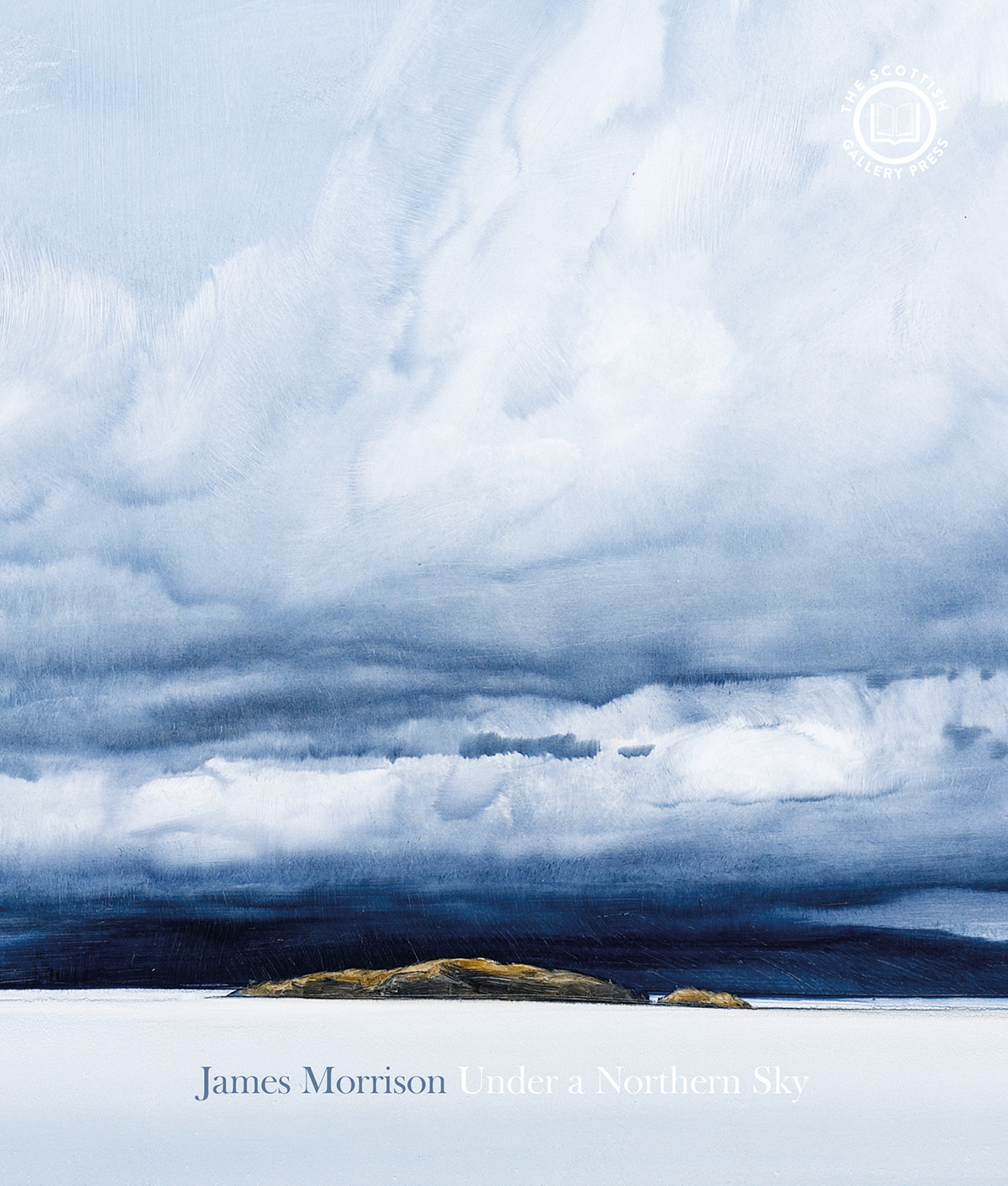
This winter, The Scottish Gallery Press has launched a new small-format hardback book on James Morrison (1932–2020), one of Scotland’s great landscape painters. With text by John Morrison, art historian and son of James Morrison. Fully illustrated, and drawing on The Scottish Gallery’s extensive archive, the book is available for £14.95 + p&p.
Founded in 2024, The Scottish Gallery Press is an independent publishing imprint dedicated to creating beautiful, small-format hardback books that bring The Scottish Gallery’s unique artistic history to life. Working closely with contemporary artists alongside the Gallery’s extensive historical archive, the Press offers a creative platform for artists, writers, and ideas, while also celebrating the rich legacy of Scottish art.
Designed to be collectible, affordable, and accessible, these carefully crafted books are intended as thoughtful introductions to artists and their work. Combining scholarship, storytelling and strong visual identity, The Scottish Gallery Press reflects The Scottish Gallery’s longstanding commitment to championing art, artists, and publishing of lasting value.

Born in Glasgow in 1932, James Morrison was one of the most significant Scottish landscape painters of the post-war period. He studied at Glasgow School of Art from 1950–54, developing the rigorous observational practice and draughtsmanship that would underpin a career spanning more than six decades. While his early paintings focused on the streets and tenements of Glasgow, his move to Catterline in 1958 marked a decisive shift towards landscape and established many of the themes that would define his mature work.
From the northeast coast and the farmland of the Mearns to the tidal landscapes of Montrose Basin and the remote expanses of Assynt, Morrison developed a highly distinctive vision of the Scottish landscape. Working predominantly en plein air, he painted directly before his subject, responding to shifting weather, changing light and the structure of the land itself. His paintings are characterised by expansive skies, measured horizons and an acute sensitivity to atmosphere, balancing direct observation with a profound understanding of space and composition.
In 1965 Morrison settled in Montrose and joined the staff of Duncan of Jordanstone College of Art in Dundee, where he later became Senior Lecturer. Alongside teaching, he continued to develop a remarkable body of work rooted in Angus and the northeast coast. The landscapes around Montrose, Farnell, Kinnell and Montreathmont became enduring subjects, allowing him to refine the visual language for which he became internationally recognised.
From the 1970s onwards, Morrison expanded his practice through regular painting trips to the west coast of Scotland, particularly Assynt and Achiltibuie, where the clarity of the atmosphere and dramatic geological forms provided new stimulus. He also travelled extensively abroad, painting in France, Greece, Botswana, Switzerland and the Canadian Arctic. Between 1990 and 1996 he undertook four expeditions to the High Arctic, producing some of the most ambitious and contemplative works of his career. These paintings, with their vast spaces, restrained palettes and elemental stillness, represent a major achievement within contemporary Scottish painting.
Morrison’s relationship with The Scottish Gallery spanned more than sixty years and formed one of the most significant artist-gallery partnerships in Scottish art. He first exhibited with The Gallery in 1959, when Aitken Dott & Son presented his debut solo exhibition in Edinburgh, introducing his paintings of Glasgow and the northeast coast to a wider audience. Over the following decades, The Scottish Gallery presented more than twenty-five solo exhibitions of his work, charting the evolution of his practice from the structural landscapes of Catterline and Angus to the monumental panoramas of Assynt and the Arctic.
From the late 1980s onwards, Morrison worked exclusively with The Scottish Gallery. This long association enabled the Gallery to present major Festival exhibitions, touring exhibitions and retrospectives that introduced successive generations of collectors and audiences to his work. The relationship was founded on a shared commitment to Scottish painting and to the sustained development of an artist’s career over a lifetime of practice.
In June 2022, The Scottish Gallery presented James Morrison: A Celebration 1932–2020, a major retrospective exhibition spanning seven decades of painting and drawing. More recently, James Morrison: Under a Northern Sky, published by The Scottish Gallery Press, further explored the breadth of his achievement, tracing his artistic journey from Glasgow and Catterline to the landscapes of Angus, Assynt and the High Arctic. The publication is available to purchase through The Scottish Gallery.
James Morrison died in 2020. His work is held in major public collections including the National Galleries of Scotland, The McManus, Glasgow Museums, the Royal Scottish Academy, Aberdeen Art Gallery and numerous university and civic collections across the UK. Widely regarded as one of the defining painters of the Scottish landscape tradition, Morrison’s work remains celebrated for its clarity, restraint and enduring sense of place.